AI Overview
A ceiling inspection is one of the best ways to identify ceiling problems before they become serious safety hazards. Sagging ceilings, cracks, water stains and loose cornices are all warning signs that shouldn’t be ignored. Acting early can help prevent further damage, reduce repair costs, and, in some cases, avoid a complete ceiling replacement.
Key takeaways
- Sagging ceilings should always be professionally assessed.
- Growing cracks can indicate movement or weakening ceiling materials.
- Water stains often point to roof leaks that require immediate attention.
- Loose cornices and nail pops can be early signs of ceiling movement.
- A regular ceiling check can identify issues before repairs become more extensive.
- Assessing sagging, cracks, water stains and surface movement.
On this page
A ceiling inspection is one of the best ways to identify ceiling problems before they become serious safety hazards. Sagging ceilings, cracks, water stains and loose cornices are all warning signs that shouldn’t be ignored. Acting early can help prevent further damage, reduce repair costs, and, in some cases, avoid a complete ceiling replacement.
In this guide, we’ll explain the signs that indicate it’s time to have your ceiling assessed, what causes these problems and what you can expect during a professional inspection.
Signs To Watch For
Many ceiling problems develop slowly, making them easy to overlook until significant damage has occurred. Knowing what to look for allows you to act sooner and helps keep your home safe.
- Sagging ceilings should always be professionally assessed.
- Growing cracks can indicate movement or weakening ceiling materials.
- Water stains often point to roof leaks that require immediate attention.
- Loose cornices and nail pops can be early signs of ceiling movement.
- A regular ceiling check can identify issues before repairs become more extensive.
Why A Ceiling Inspection Matters
Many homeowners don’t think about their ceilings until visible damage appears. By that stage, what may have started as a minor issue could have progressed into a much larger repair. A professional ceiling inspection helps identify the cause of the problem before it worsens.
Across Perth, ageing plaster and glass ceilings, roof leaks and failed ceiling fixings continue to be common causes of ceiling damage. Recognising the warning signs early improves safety and often reduces the amount of work needed to restore the ceiling.
Building and Energy WA advises homeowners to pay attention to signs of ceiling stress, as ceiling collapses continue to occur in Western Australia each year. Most ceilings provide visible warning signs before they fail, making early action worthwhile.
| Warning Sign | Why It Matters |
|---|---|
| Sagging ceiling | Can indicate failing ceiling fixings or structural movement. |
| Growing cracks | May signal movement within the ceiling or plasterboard joints. |
| Water stains | Usually indicates moisture entering from the roof space. |
| Loose cornices | Often suggest movement between the walls and the ceiling. |
| Cracking or popping sounds | May indicate the ceiling is under stress. |
Signs It’s Time For A Ceiling Inspection
Most ceilings don’t suddenly fail without warning. They usually develop visible changes that become more noticeable over time. Knowing these signs can help you arrange a professional assessment before the damage becomes more extensive.
If you notice one or more of the following issues, it’s worth investigating the condition of your ceiling rather than waiting for the problem to worsen.

A Sagging Or Bowed Ceiling
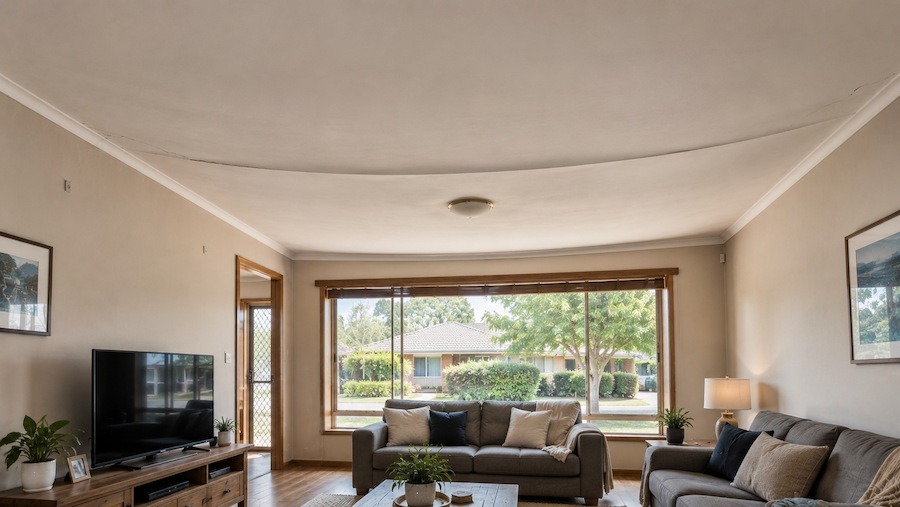
A sagging ceiling is one of the clearest indicators that something isn’t right. Even a slight bow should never be dismissed as normal ageing. Over time, the ceiling can continue to drop as the fixings weaken or the materials deteriorate.
Several factors can contribute to sagging, including roof leaks, ageing plaster, glass, failed fixings, poor installation and excess weight stored in the roof space. Older Perth homes are particularly susceptible because many still have their original ceiling materials.
A professional ceiling inspection helps determine whether the sagging is isolated to one area or whether the entire ceiling has been affected. Identifying the cause allows repairs to address the problem rather than simply the symptoms.
Cracks Appearing Across The Ceiling
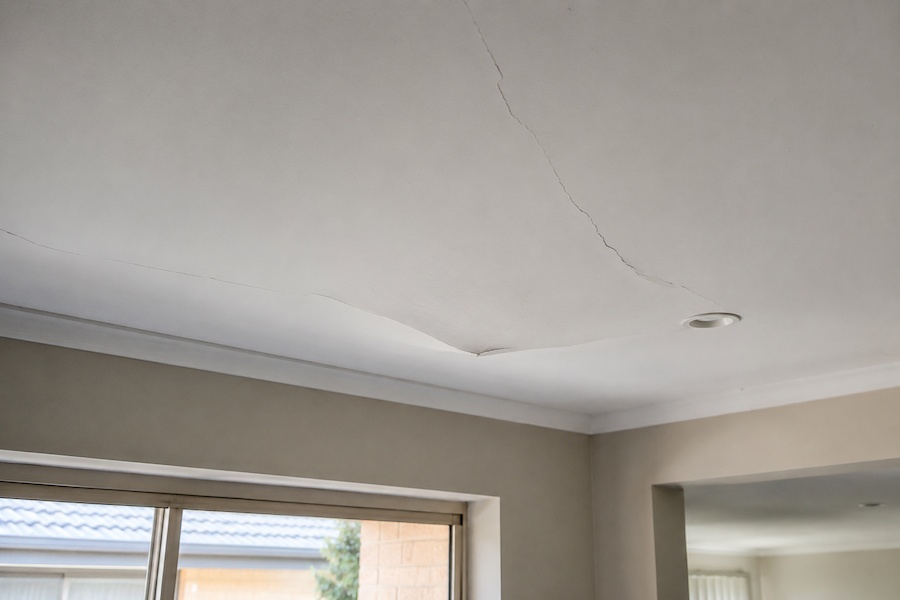
Not every crack indicates a structural problem, but new cracks or cracks that continue to grow deserve attention. They can develop because of building movement, failing joints, moisture damage or weakening ceiling materials.
A professional ceiling crack inspection helps determine whether the damage is cosmetic or whether repairs are needed to restore the ceiling safely. This is especially important if the cracks appeared after heavy rain or continue to become more noticeable.
If several cracks appear across different rooms, arranging a ceiling check is a sensible next step. Early assessment often prevents more costly repairs later.
Cornices Pulling Away From The Wall
Cornices are designed to remain firmly fixed between the ceiling and the wall. If they begin separating, cracking or developing widening gaps, the ceiling above may be moving.
While small hairline gaps can occur as homes naturally settle, larger separations often point to an underlying issue that should be investigated. Simply repairing the cornice without addressing the cause usually results in the damage returning.
A thorough ceiling inspection helps determine whether the problem is limited to the cornice or whether movement is affecting the ceiling itself.
Nail Pops Or Circular Ceiling Marks
Small circular marks that appear in straight lines across the ceiling are commonly known as nail pops or screw pops. These occur when plasterboard begins pulling away from the ceiling framing.
Although they often appear minor, nail pops can be one of the earliest visible signs that the ceiling fixings are beginning to fail. Over time, additional movement may result in sagging or cracking.
A professional ceiling check can identify whether the ceiling remains securely fixed or whether preventative repairs are recommended before more obvious damage develops.
Cracking, Popping, or Creaking Sounds
Ceilings should not regularly produce loud cracking, popping or creaking sounds. While minor movement caused by changing temperatures can be normal, repeated noises may indicate that the ceiling is shifting or that the fixings are under stress.
If these sounds occur alongside sagging, cracks or separating cornices, they should be treated as an early warning sign. The Government of Western Australia lists this as a potential cause of ceiling collapse. A professional ceiling inspection can identify whether movement within the ceiling requires repair before the damage becomes more severe.
Water Damage And Moisture Stains
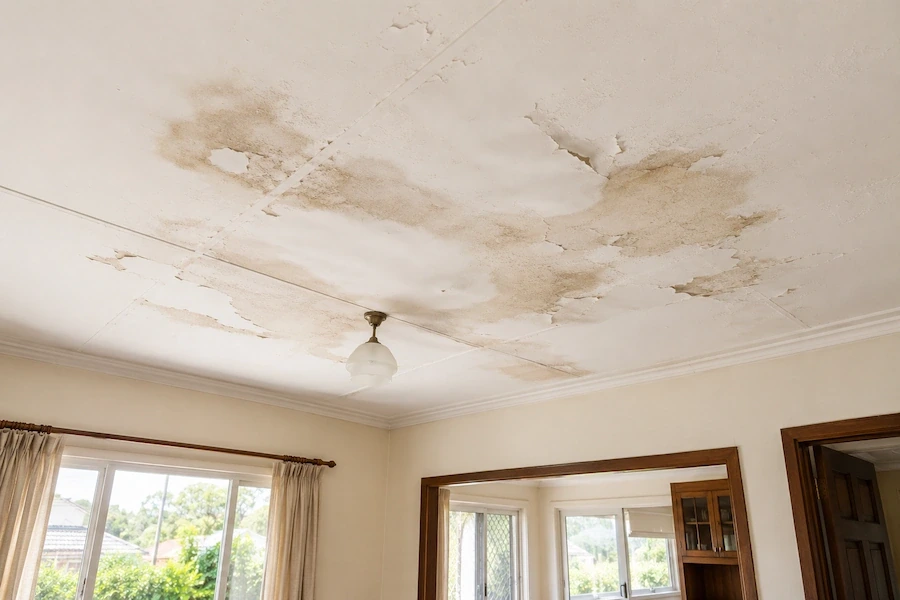
Water damage is one of the most common causes of ceiling repairs throughout Perth. Brown stains, bubbling paint, peeling finishes and mould growth usually indicate that moisture has entered the ceiling cavity. Even if the ceiling appears to have dried, the materials may already have been weakened.
Moisture reduces the strength of plasterboard, damages plasterglass and can cause ceiling fixings to deteriorate over time. If left unresolved, the affected area may begin to sag or eventually fail.
A ceiling crack inspection may also be recommended if cracks appear near water stains, as moisture often contributes to joint failure and ceiling movement. Before repairing the ceiling, the source of the leak should always be identified and repaired.

Doors And Windows Becoming Difficult To Open
Doors and windows that suddenly become difficult to open or close are not always caused by ceiling problems, but they can indicate movement within the home. If this change occurs together with ceiling damage, it deserves further investigation.
When several warning signs appear at the same time, arranging a professional assessment provides a better understanding of what is happening. Identifying the cause early usually results in a simpler repair.
What Causes Ceiling Damage?
Ceiling damage rarely develops without a reason. Most problems are caused by moisture, ageing materials or movement that slowly weakens the ceiling over time. Understanding these causes helps homeowners reduce the likelihood of major repairs.
Every ceiling inspection should focus on identifying the underlying cause before repairs begin. Fixing visible damage without resolving the source often leads to the same problem returning.
| Cause | How It Affects The Ceiling |
|---|---|
| Roof leaks | Weakens plasterboard, insulation and ceiling fixings. |
| Storm damage | Allows moisture to enter through damaged roofing materials. |
| Poor installation | Can shorten the lifespan of the ceiling and lead to movement. |
| Ageing plasterglass | Older materials naturally become weaker over time. |
| Heavy roof storage | Adds unnecessary weight and stress above the ceiling. |
| Condensation | Creates long-term moisture that weakens ceiling materials. |
| Unsafe roof access | Walking directly on plasterboard can damage the ceiling below. |
Roof Leaks
Roof leaks remain one of the leading causes of ceiling failure in Perth homes. Water entering through damaged roofing can soak insulation, weaken plasterboard and reduce the holding strength of ceiling fixings. Even a slow leak can cause significant damage if left unattended.

Storm Damage
Heavy rain, hail and strong winds can damage roof coverings and flashing, allowing moisture to enter the roof cavity. After severe weather, it’s worth checking for new stains, cracks or signs of movement inside your home.
Poor Ceiling Installation
Incorrect fixing methods, inadequate fastening or unsuitable materials can reduce the lifespan of a ceiling. Installation problems may not become noticeable for many years, particularly when combined with moisture or normal building movement.
Ageing Plasterglass Ceilings
Many older Perth homes still have their original plaster-and-glass ceilings. Although these ceilings can last for decades, the materials and fixings naturally weaken with age. Regular inspections become increasingly valuable as the ceiling continues to age.
Heavy Loads Stored In Roof Spaces
Roof spaces are not intended for storing heavy household items unless they have been specifically designed for storage. Extra weight places additional stress on the ceiling framing and can contribute to sagging over time.
Moisture And Long-Term Condensation
Not all moisture problems come from roof leaks. Poor ventilation can allow condensation to build up inside the roof space, gradually weakening ceiling materials and creating favourable conditions for mould growth.
Unsafe Roof Space Access
Walking directly on plasterboard or placing weight where it isn’t supported can damage the ceiling below. Anyone entering the roof space should move carefully across the structural framing to avoid unnecessary damage.
What Happens During A Professional Ceiling Inspection?
Many homeowners aren’t sure what to expect during an inspection. The process involves much more than simply looking at visible damage. The aim is to identify what caused the problem and determine the safest, most effective repair.
A thorough ceiling inspection usually includes the following steps.
- Assessing sagging, cracks, water stains and surface movement.
- Checking cornices, joints and ceiling fixings.
- Looking for signs of moisture damage or roof leaks.
- Identifying the likely cause of the damage.
- Recommending the most appropriate repair solution.
Understanding why the damage occurred is an important part of the process. Repair recommendations should always address the cause rather than simply covering visible defects.
How To Help Prevent Ceiling Problems
Not every ceiling problem can be prevented, particularly in older homes, but regular maintenance can significantly reduce the likelihood of major repairs. Small issues are much easier to manage when they’re identified early.
Developing a routine of checking your ceiling and responding quickly to warning signs helps protect both your home and your family’s safety.
Inspect Your Ceiling Regularly
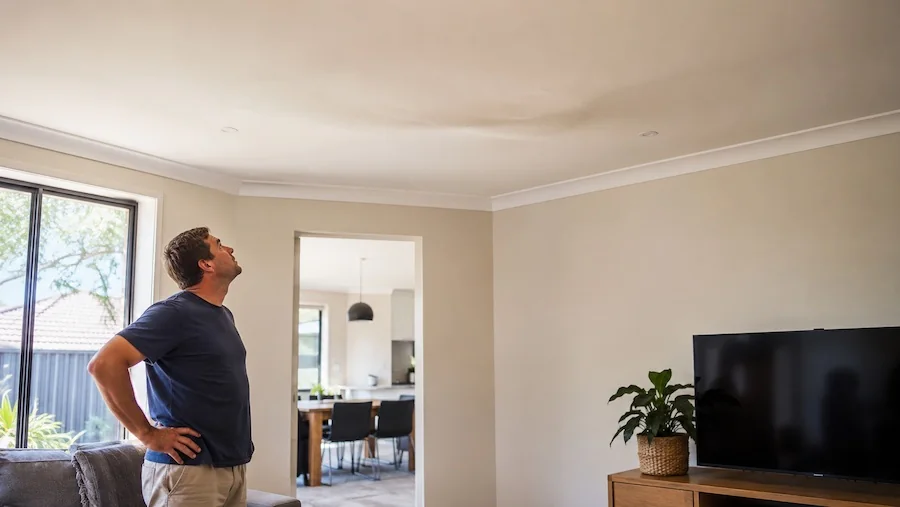
Take a few minutes every few months to look across your ceilings in good natural light. Look for new cracks, sagging, water stains, bubbling paint or loose cornices. These changes often develop gradually, making them easy to miss during everyday life.
If you notice anything unusual, arranging a ceiling inspection allows the problem to be assessed before it becomes more extensive.
Check After Heavy Rain Or Storms
Perth experiences periods of heavy rainfall and strong winter storms that can damage roofing materials. After severe weather, inspect ceilings for fresh stains, damp patches or new cracks that weren’t there before.
Finding moisture early gives you a better chance of repairing the source before it weakens the ceiling structure.
Repair Roof Leaks Promptly
Even a slow roof leak can cause significant damage over time. Water doesn’t just stain the ceiling. It can also weaken plasterboard, soften plasterglass, damage insulation and reduce the strength of ceiling fixings.
Repairing the leak first prevents ongoing damage and gives any ceiling repairs the best chance of lasting.
Avoid Storing Heavy Items In The Roof Space
Many homeowners use roof spaces for storage without realising the additional load this places on the ceiling below. Boxes of books, timber, tools and other heavy items can increase stress on ceiling framing and fixings.
If your roof space hasn’t been designed for storage, it’s best to keep heavy items elsewhere.
Maintain Good Roof Space Ventilation
Proper ventilation reduces condensation and helps keep ceiling materials dry. Bathroom exhaust fans should vent outside the roof cavity wherever possible to minimise long-term moisture build-up.
Good airflow also helps protect insulation and timber framing from unnecessary moisture exposure.
Replace Water-Damaged Materials
Once the source of a leak has been repaired, any damaged plasterboard or insulation should also be replaced where necessary. Leaving deteriorated materials in place can lead to mould growth and ongoing structural deterioration.
Frequently Asked Questions
How Often Should A Ceiling Be Professionally Assessed?
There isn’t a single timeframe that suits every property. Older Perth homes, properties with previous roof leaks and homes with ageing plasterglass ceilings can benefit from periodic assessments. You should also arrange a professional inspection whenever you notice new signs of movement or damage.
Can A Sagging Ceiling Collapse?
Yes. While many ceilings provide warning signs beforehand, a severely weakened ceiling can eventually collapse if the underlying problem continues. Sagging should always be treated as a safety concern rather than simply a cosmetic issue.
Are Ceiling Cracks Always Serious?
Some hairline cracks occur naturally as buildings settle, but cracks that widen, spread across the ceiling or appear alongside sagging and water damage should be professionally assessed. A ceiling crack inspection helps determine whether repairs are needed.
Should I Arrange An Inspection After A Roof Leak?
Yes. Water damage isn’t always visible from below. Moisture may have weakened the ceiling materials or affected the fixings even if the ceiling appears dry. A ceiling inspection helps determine whether hidden damage is present.
Can A Ceiling Still Be Weak After It Dries?
Yes. Once plasterboard or plasterglass has absorbed water, it may not regain its original strength after drying. Damaged materials should always be assessed before assuming the ceiling is safe.
Keeping Your Ceiling Safe
Ceiling problems rarely improve on their own. Sagging, cracks, water stains, loose cornices and unusual noises are all signs that deserve attention before they develop into more serious structural issues. Acting early helps improve safety and often reduces the extent of repairs.
If you’ve noticed any of these warning signs, Ceiling Repairs Perth can provide a professional ceiling inspection and recommend the most appropriate solution for your home.

Shannon Dowling
Shannon Dowling is a qualified ceiling repair specialist based in Perth, Western Australia, with hands-on experience repairing, replacing, and restoring ceilings across homes throughout the metro area. From sagging plasterboard and water damage to heritage cornice work and full ceiling replacements, Shannon has worked on just about every type of ceiling problem Perth homes throw up. Learn MoreCeiling Services That Can Help
If this sounds like your ceiling, here is how we can sort it.