AI Overview
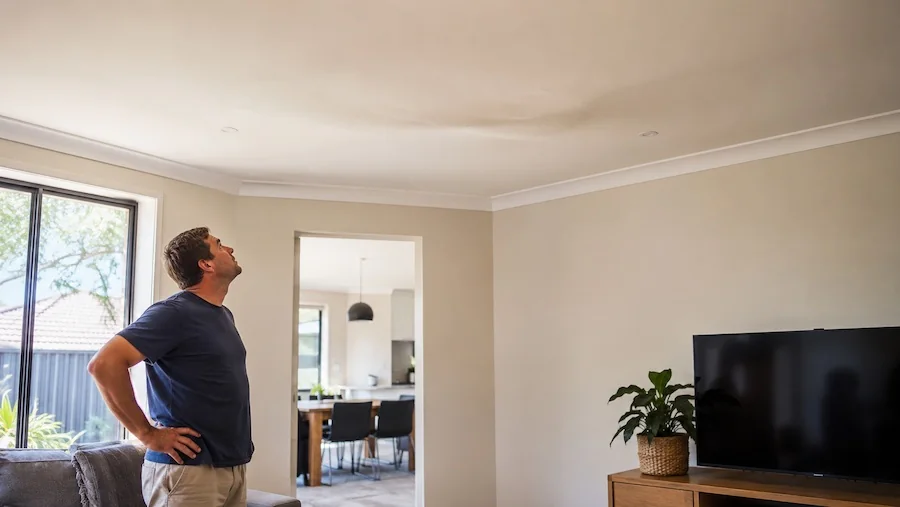
Termite ceiling damage needs repairs as soon as there are signs of structural weakening, sagging, cracking, or ceiling movement. Because termites often attack roof timbers and ceiling supports out of sight, significant damage can occur before homeowners notice a problem. A sagging ceiling should never be ignored.
Key takeaways
- Termite ceiling damage can weaken the structural supports above your ceiling.
- Common warning signs include ceiling cracks, sagging, movement, and distortion.
- Termite damage is often hidden inside roof spaces and timber framing.
- Termite holes in ceiling linings can indicate activity above the ceiling.
- Termite tubes ceiling structures may be visible around roof spaces, walls, or ceiling junctions.
- Any ceiling showing signs of structural movement should be professionally assessed.
On this page
Termite ceiling damage needs repairs as soon as there are signs of structural weakening, sagging, cracking, or ceiling movement. Because termites often attack roof timbers and ceiling supports out of sight, significant damage can occur before homeowners notice a problem.
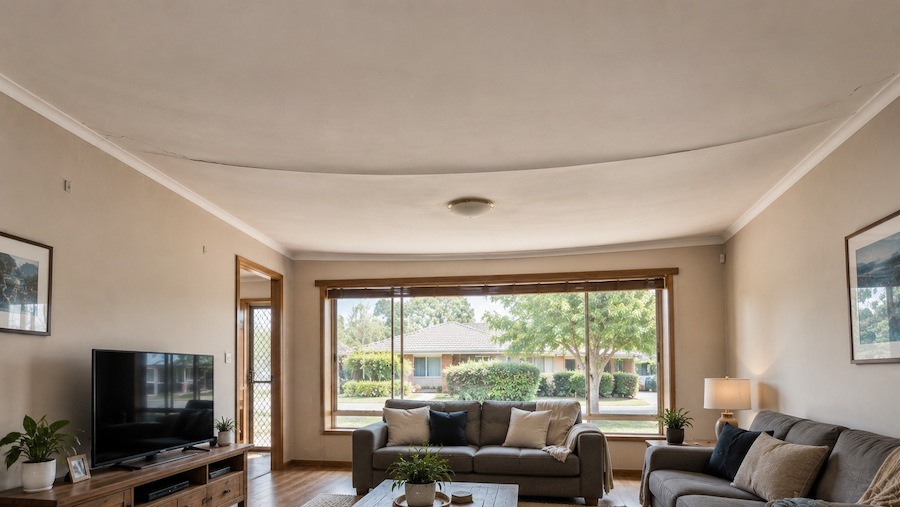
A sagging ceiling should never be ignored. Left untreated, termite ceiling damage can worsen over time, increasing the risk of structural instability, more extensive repairs, and potentially a ceiling collapse.
Understanding the warning signs can help homeowners act early, prevent further damage, and determine when professional repairs are needed.
Key Takeaways
- Termite ceiling damage can weaken the structural supports above your ceiling.
- Common warning signs include ceiling cracks, sagging, movement, and distortion.
- Termite damage is often hidden inside roof spaces and timber framing.
- Termite holes in ceiling linings can indicate activity above the ceiling.
- Termite tubes ceiling structures may be visible around roof spaces, walls, or ceiling junctions.
- Any ceiling showing signs of structural movement should be professionally assessed.
- Active termites should always be treated before repair work begins.
- Delaying repairs can increase both safety risks and repair costs.
- Early intervention can prevent more extensive termite damage in homes.
- Professional inspections are often the only way to determine the full extent of termite ceiling damage.
How Termites Damage Ceilings
Termites do not usually feed on plasterboard or plaster-glass ceilings themselves. Instead, they target the timber structures supporting the ceiling. According to the Government of Western Australia, approximately 20 species of termites target timber in structures, and can cause extensive damage.
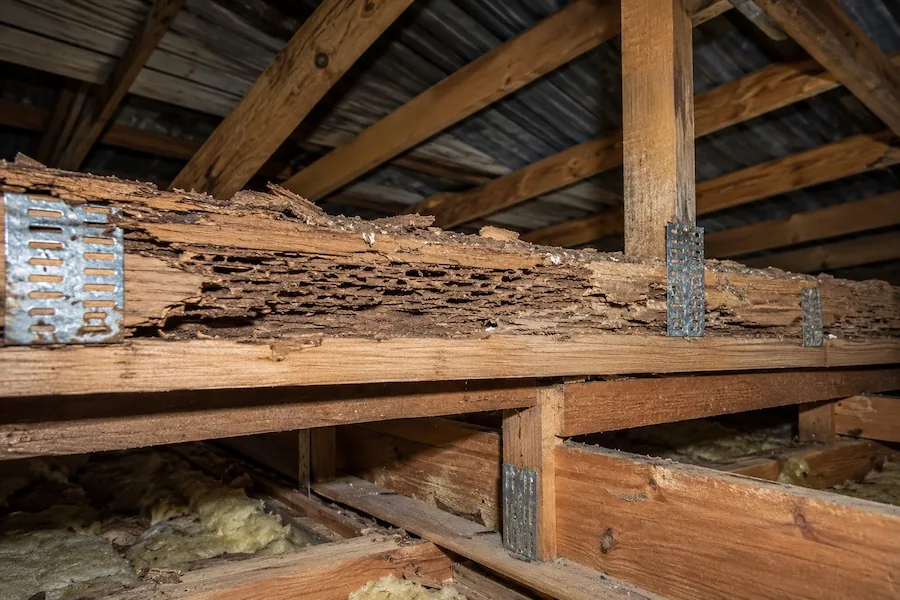
Commonly affected components include:
- Ceiling joists
- Roof timbers
- Timber battens
- Roof framing
- Ceiling support members
- Timber trusses in older homes
These structural components carry the weight of the ceiling. As termites consume the timber, the structure gradually weakens. When enough damage occurs, the ceiling may begin to sag, crack, bow, or move.
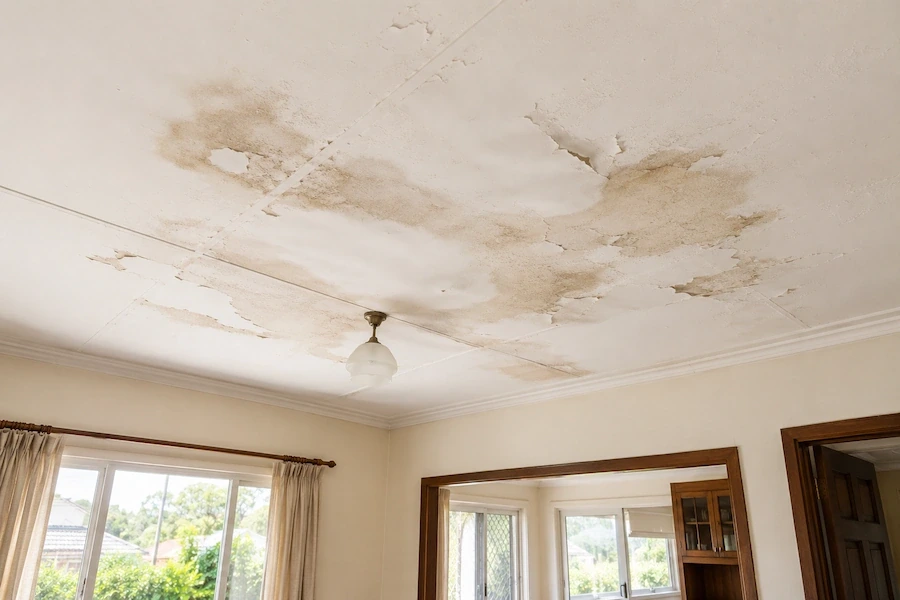
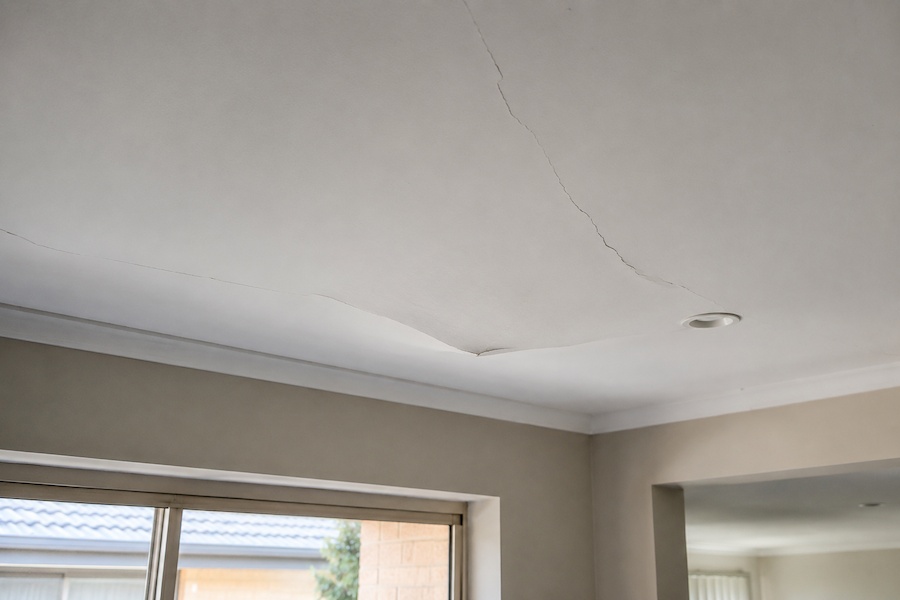
Because termite ceiling damage often occurs above the ceiling lining, many homeowners are unaware there is a problem until visible symptoms appear. Common signs include ceiling cracks, ceiling movement, loose ceiling sections, termite holes in ceiling surfaces, and visible termite tubes ceiling junctions.
In some Perth homes, termite tubes ceiling areas can be found near wall-to-ceiling connections, roof framing, or roof space access points. These mud tubes help termites travel safely between their nest and food source.
The hidden nature of termite activity is one reason termite damage in homes can become extensive before repairs begin. By the time symptoms appear inside the home, structural timbers may already have sustained significant damage.
Signs of Termite Ceiling Damage
The earlier termite ceiling damage is identified, the easier and more affordable it is to repair. More importantly, early action can help prevent serious structural problems and reduce the risk of ceiling collapse.
Minor Warning Signs
Early signs of termite ceiling damage are often easy to overlook.
Common warning signs include:
- Small ceiling cracks
- Slight ceiling sagging
- Minor ceiling movement
- Hollow-sounding timber
- Soft or deteriorating roof timbers
- Small termite holes in ceiling linings
- Evidence of termite tubes ceiling junctions
Many Perth homeowners assume these issues are simply caused by ageing or normal building movement. Unfortunately, what appears to be a minor defect can sometimes indicate significant damage above the ceiling.
Serious Warning Signs
As termite ceiling damage progresses, the symptoms become more obvious.
| Sign of Termite Ceiling Damage | What It May Indicate | Repair Priority |
|---|---|---|
| Small ceiling cracks | Early structural movement | Monitor and inspect |
| Small termite holes in ceiling | Possible termite activity above the ceiling | Arrange inspection |
| Termite tubes ceiling areas | Active or previous termite activity | Inspect promptly |
| Slight ceiling sagging | Weakening ceiling supports | Repair soon |
| Distorted ceiling surfaces | Structural deterioration | Repair soon |
| Visible ceiling movement | Significant support damage | High priority |
| Large cracks and severe sagging | Advanced structural damage | Urgent repair |
| Ceiling sections dropping | Potential ceiling collapse risk | Immediate assessment |
When Does Termite Ceiling Damage Need Repairs?
The simple answer is immediately.
Once termite ceiling damage affects structural timber, repairs should be planned as soon as the termite infestation has been professionally treated.
Waiting rarely improves the situation. In most cases, the damage gradually worsens over time.
When Repairs Become Urgent
There are situations where termite ceiling damage should be treated as an urgent safety issue.
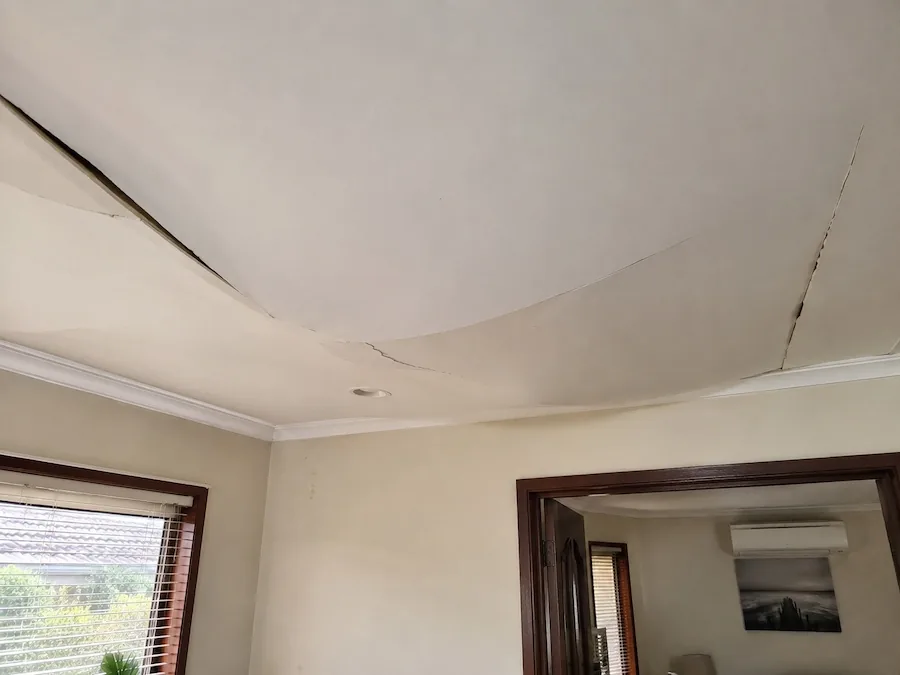
Urgent repairs may be required when:
- The ceiling is visibly dropping
- Sagging is becoming progressively worse
- Large ceiling sections appear unsupported
- Structural timbers have sustained severe damage
- The ceiling no longer appears stable
- There is concern about potential ceiling collapse
A heavily sagging ceiling should never be ignored. In severe cases of termite damage in homes, sections of ceiling can partially collapse without significant warning.
Risks of Ignoring Termite Ceiling Damage
Many homeowners delay repairs because the damage appears minor. Unfortunately, termite ceiling damage often worsens long before visible signs become severe.
Termites can move through connected roof and ceiling timbers, causing additional structural deterioration over time. What begins as a small area of damage can gradually affect larger sections of the ceiling structure.
Delaying repairs can also increase costs. Minor termite ceiling damage may only require localised structural repairs and ceiling restoration. More advanced damage can require extensive timber replacement, ceiling restoration, or complete ceiling replacement.
Most importantly, termite ceiling damage can create serious safety hazards. When structural timbers are weakened, ceilings may become unstable. A sagging ceiling should never be dismissed as purely cosmetic, particularly in older Perth homes where ageing materials may already place additional stress on the ceiling structure.
How Termite Ceiling Damage Is Repaired
Every repair project is different because no two ceilings experience the same level of damage.
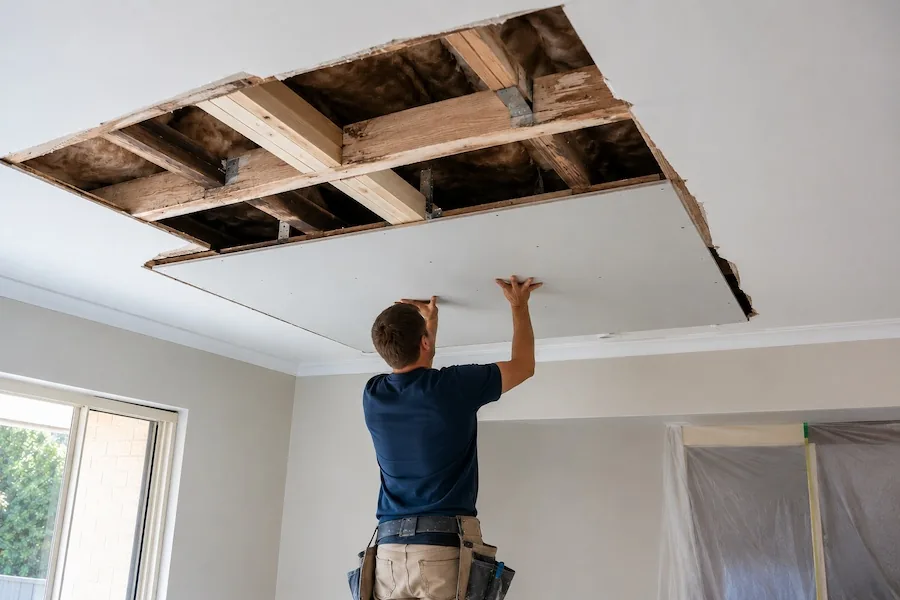
Step 1: Eliminate Active Termites
Before repairs begin, active termites must be professionally treated.
Repairing a ceiling while termites remain active can lead to ongoing damage and additional repair costs later. Whether the signs include termite holes in ceiling areas or visible termite tubes ceiling structures, treatment should always occur before restoration begins.
Step 2: Assess and Repair Structural Damage
Once termite activity has been addressed, the damaged structural timbers are inspected.
This assessment helps identify:
- Which timbers are affected
- How severe the damage is
- Whether reinforcement is possible
- Whether replacement is required
Depending on the condition of the timber, repairs may involve reinforcing weakened supports, replacing damaged ceiling joists, replacing roof timbers, and restoring structural strength.
Many cases of termite damage in homes involve hidden deterioration that cannot be identified without inspecting the roof space.
Step 3: Restore the Ceiling
After structural repairs have been completed, the visible ceiling can be restored.
This may include:
- Plasterboard ceiling repairs
- Plasterglass ceiling repairs
- Ceiling crack repairs
- Cornice repairs
- Ceiling restoration
- Ceiling replacement
The goal is to restore both the appearance and safety of the ceiling while ensuring the underlying structural issues have been properly addressed.
Can Termite Ceiling Damage Be Prevented?
While no home is completely immune to termites, early detection can significantly reduce the likelihood of major repairs.
Regular Termite Inspections
Professional termite inspections are one of the most effective ways to identify termite activity before extensive damage occurs.
Regular inspections can help identify:
- Active termite activity
- Early termite ceiling damage
- Hidden structural deterioration
- Areas vulnerable to future infestations
This is particularly important for older Perth homes with timber roof structures.
Acting Early Saves Money
One of the most consistent patterns we see is that early repairs are usually far more affordable than delayed repairs.
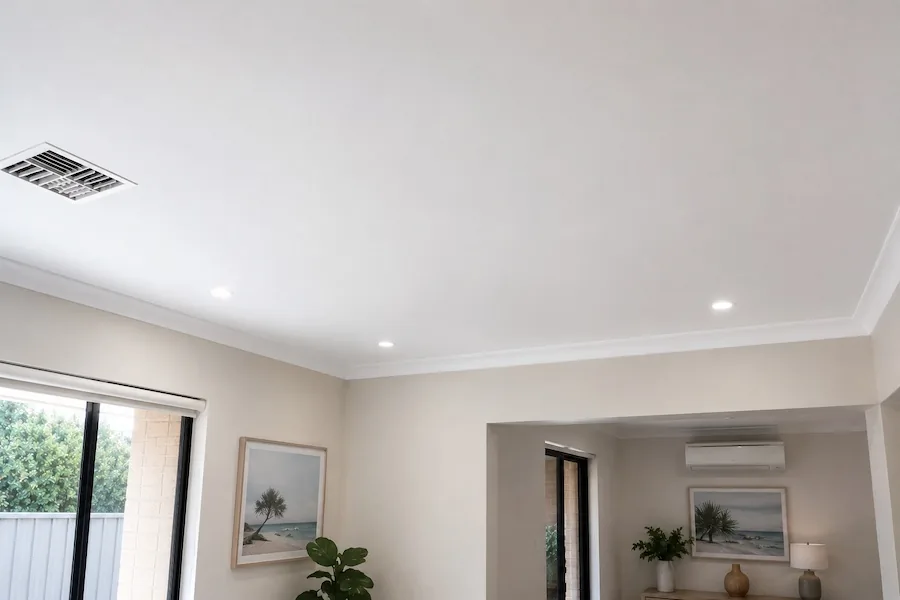
A small amount of termite ceiling damage may only require limited structural work. The same problem left untreated can lead to significant timber replacement, ceiling restoration, ceiling replacement, and additional structural repairs.
Acting quickly helps protect the ceiling structure, reduce repair costs, and minimise disruption to the household.
Frequently Asked Questions
Can termites cause a ceiling to collapse?
Yes. Severe termite ceiling damage can weaken the structural timbers supporting the ceiling. If enough damage occurs, sections of the ceiling may sag significantly or potentially collapse. Any sagging ceiling should be professionally assessed as soon as possible.
What does termite ceiling damage look like?
Common signs include ceiling cracks, sagging, bowing, movement, loose ceiling sections, termite holes in ceiling surfaces, and visible termite tubes ceiling areas. In many cases, the structural damage above the ceiling is more extensive than the visible symptoms below.
Can termite-damaged ceiling timbers be repaired?
In some situations, damaged timbers can be reinforced. Where the damage is extensive, replacement is often the safest option. The appropriate repair method depends on the severity of the termite ceiling damage and the structural role of the affected timber.
How do I know if a sagging ceiling is caused by termites?
A sagging ceiling can have several causes, including water damage, ageing plasterglass ceilings, failed fixings, and termite activity. A professional inspection is usually required to determine the exact cause and identify any hidden structural damage.
Should termite treatment happen before ceiling repairs?
Yes. Active termites should always be treated before structural repairs begin. Repairing the ceiling before termite treatment can result in ongoing damage and further repair costs if termites remain active.
Protect Your Home From Termite Ceiling Damage
Termite ceiling damage should be repaired as soon as signs of sagging, cracking, structural weakening, or ceiling movement appear. Acting early can help prevent further damage, reduce repair costs, and lower the risk of ceiling collapse.
Because termite damage is often hidden within roof spaces and structural timbers, professional inspections are the best way to determine the extent of the problem and identify the right repair solution.
If you’ve noticed ceiling cracks, sagging, termite holes in ceiling surfaces, termite tubes in ceiling areas, or other signs of termite damage in homes, contact Ceiling Repairs Perth today. Our experienced ceiling fixers provide professional ceiling repair services, reliable workmanship, and long-lasting repairs across Perth.
Ceiling Services That Can Help
If this sounds like your ceiling, here is how we can sort it.