AI Overview
A ceiling repair in Perth is priced on the material, how much is damaged, the cause, access, the cornice moulding and the paint finish. A small sag often means fixing the sheets back up to the framing across the whole room, and the leak or other cause has to be fixed first.
Key takeaways
- Plasterglass, an older plaster sheet reinforced with fibreglass, and plasterboard, often called gyprock, are repaired in different ways.
- The cause, such as a roof leak, has to be fixed before the ceiling.
- A sag in one corner often means fixing the sheets back up across the whole room.
- Matching the cornice, the moulding where the wall meets the ceiling, and high ceilings add time to a job.
- Our repairs are left ready to paint, and painting is quoted separately.
- Two quotes far apart are usually describing two different jobs.
On this page
The cost of a ceiling repair in Perth depends on six things: what the ceiling is made of, how much is damaged, what caused it, how easy it is to reach, whether the cornice is involved, and how the finish has to match.
Two jobs that look the same from the floor can be quoted very differently once those are known.
The smallest job we take on is a patch of about a square metre, and that starts at $700 before painting. Anything bigger is priced on those six things, and every quote we give is fixed price and in writing.
Before You Get a Quote
- The type of ceiling sheet matters. Plasterglass, an older plaster sheet reinforced with fibreglass, and plasterboard, often called gyprock, are repaired in different ways.
- The cause has to be fixed first. A ceiling repaired under an active leak will fail again.
- Size is only part of it. A small sag can mean refixing the whole room, which is fixing the sheets back up to the framing.
- Cornice, the moulding where the wall meets the ceiling, adds time, especially the older decorative styles.
- Access changes the job: high ceilings, stairwells and tight roof spaces all take longer.
- We leave repairs ready to paint and quote painting as a separate item.
What Your Ceiling Is Made Of
Most Perth ceilings are one of two materials. Plasterboard is a sheet of gypsum plaster between two layers of paper, and most people call it gyprock, after the brand. Plasterglass is an older sheet made of plaster reinforced with fibreglass, common in Perth homes built between about 1970 and 2000.
The difference matters for cost. A plasterboard ceiling is screwed or glued to battens, which are the thin timber or steel strips fixed under the roof framing. Damaged sections can usually be cut out and replaced with new sheet, then joined in.
Plasterglass sheets were mostly glued straight to the jarrah joists, the main timber beams of the ceiling. When that glue lets go, the sheets drop. The usual fix is re-strapping, where we lay strips of fibreglass, called roving, soaked in plaster over the joists from inside the roof space to hold the sheet back up.
Older homes can also have lath and plaster, which is plaster spread over thin timber strips, or fibre cement sheet, which may contain asbestos in houses built before the late 1980s. Either of those changes the job completely, so it is worth knowing what you have before anyone quotes.
How Much of the Ceiling Is Damaged
A single crack along a sheet join is a small job. The join is opened up, re-taped and re-set with plaster, then sanded and painted. A hole or a stained patch is a bigger job, because a piece of new sheet has to be fitted and blended in.
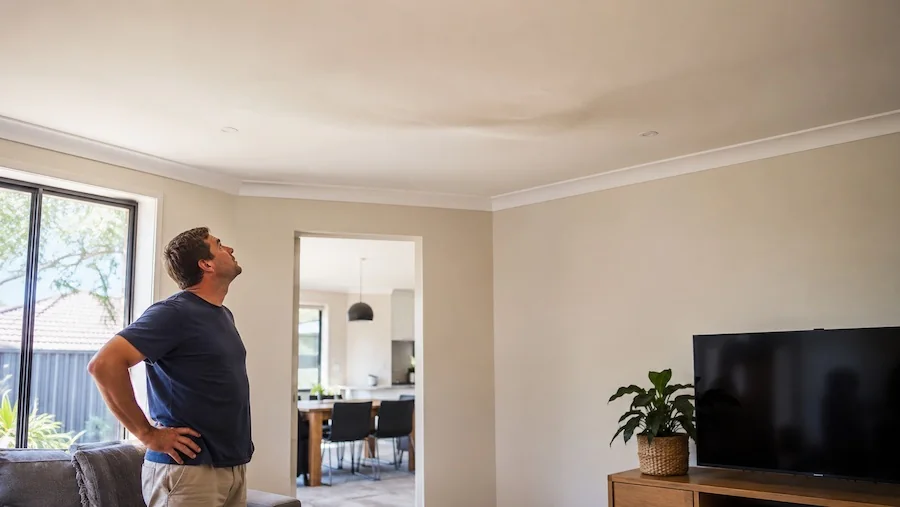
Sagging is where people are most often surprised. A sag in one corner usually means the fixing has failed across more of the room than you can see. Repairing only the visible dip leaves the rest of the sheet hanging on the same tired glue.
So a quote for a sagging ceiling is often for the whole room, not the patch you pointed at. Fixing the whole room costs more on the day, but it means you are not paying for a second repair when the next corner drops.
| What you can see | What usually needs doing | What pushes the cost up |
|---|---|---|
| A hairline crack along a straight line | Re-tape and re-set the sheet join, then paint | Cracks that keep coming back, which point to movement |
| A small hole or dent | Cut out the damaged piece, fit new sheet, set and sand | Holes near the cornice or a light fitting |
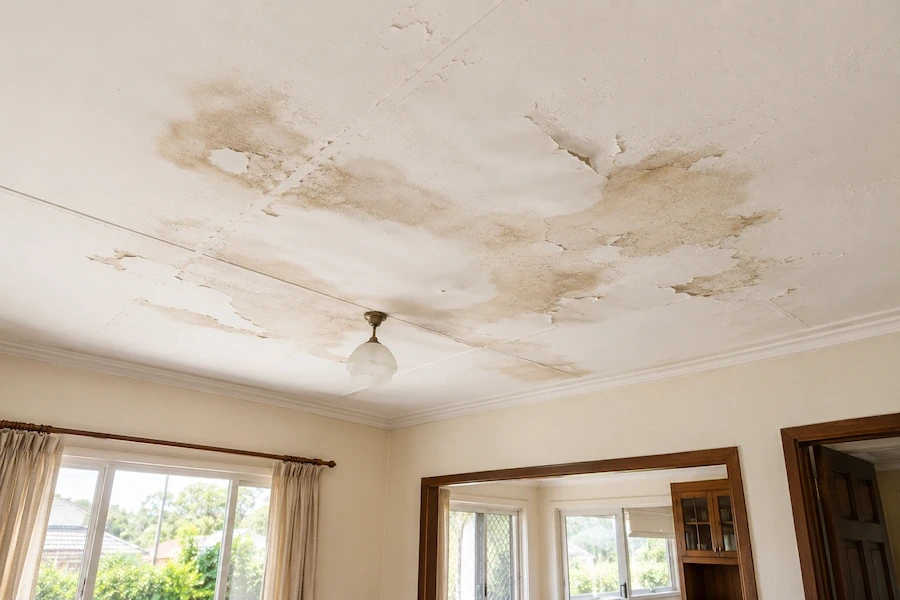
| A brown water stain | Find and fix the leak, then replace or seal the stained area | Soft or crumbling sheet behind the stain |
| A dip or sag | Refix or re-strap the whole sheet or room | Plasterglass, wide rooms, poor roof access |
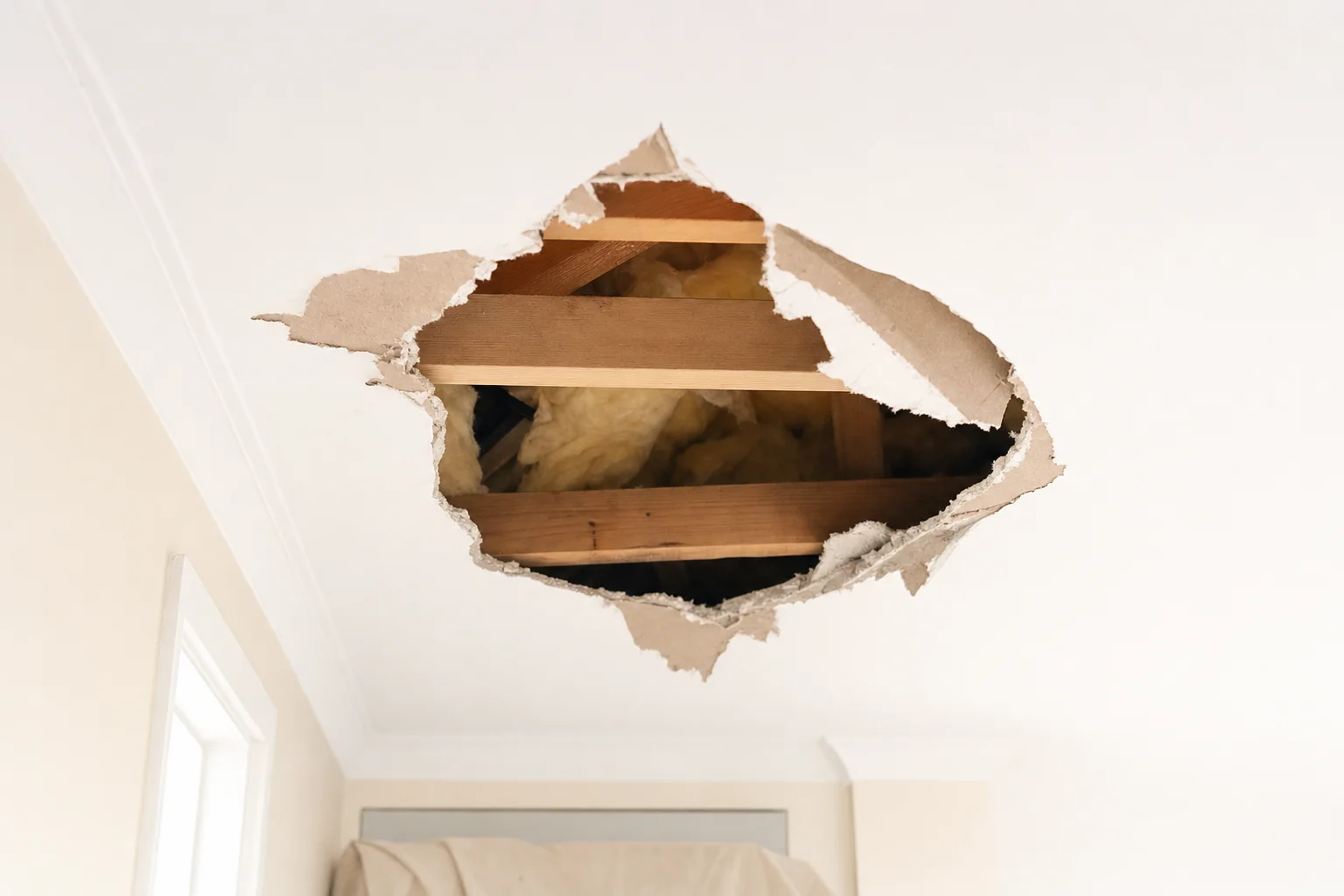
| A ceiling that has come down | Make the area safe, then replace the ceiling | Insulation clean-up, wiring, asbestos testing |
What Caused the Damage
The cause has to be dealt with before the ceiling is repaired, and some causes cost more to fix than the ceiling itself. A roof leak, a burst pipe in the roof space, a leaking shower above a ceiling, termites in the joists or a roof that has moved will all keep damaging a new repair.
Water is one of the most common causes of ceiling damage in Perth. After a big winter storm, a cracked roof tile or a blocked valley, the channel where two roof slopes meet, can send water onto the back of the ceiling for weeks before anyone sees a stain. By then the sheet may have softened well past the stain.
If a plumber or roofer has already fixed the source, tell whoever is quoting the ceiling. If the leak hasn't been fixed yet, the ceiling quote should say it has to be fixed first, because a repair under a live leak gets wet again.
Plasterboard Repairs Versus Replacing the Ceiling
Repairing is usually cheaper than replacing when the damage is confined to one area and the rest of the sheet is sound. Replacing makes more sense when the damage runs across most of the room, the sheets are sagging everywhere, or the ceiling has been patched so many times the patches show.
A full ceiling replacement means taking the old ceiling down, checking the battens and joists, fitting new plasterboard, setting every join, fitting cornice and painting. It is more work up front, but you end up with a new ceiling and no old patches showing through.
We'll tell you straight when a smaller fix is the right call. Plenty of ceilings that owners expect to replace only need refixing and a join or two re-set.
Cornice and Ceiling Roses
Cornice is the moulding that runs where the wall meets the ceiling. A plain cove cornice, the gentle curved profile in most Perth homes, is quick to cut and fit. An ornate or older profile can be hard to match, and sometimes has to be repaired in place rather than replaced.
A ceiling rose is the decorative plaster round in the middle of the ceiling, usually around a light. In older homes these are often original and worth keeping, which means taking them down carefully or working around them.
When a quote seems high for a small area, cornice is often the reason. It is worth asking whether the cornice is included and whether it will be matched or replaced along the whole wall.
Access and the Size of the Room
Most ceilings in a single storey home can be reached from a stepladder or a small platform. High raked ceilings, the sloping kind that follow the roof line, stairwells and double height entries need scaffolding or a mobile platform, and that adds time to set up and move.
Access to the roof space matters too. Re-strapping a plasterglass ceiling is done from above, so a low pitched roof, a cramped cavity or deep insulation makes the job slower.
Furniture is a smaller factor, but it counts. A room that is cleared and covered before the team arrives is quicker to work in than one where everything has to be moved first.
Painting and the Finish
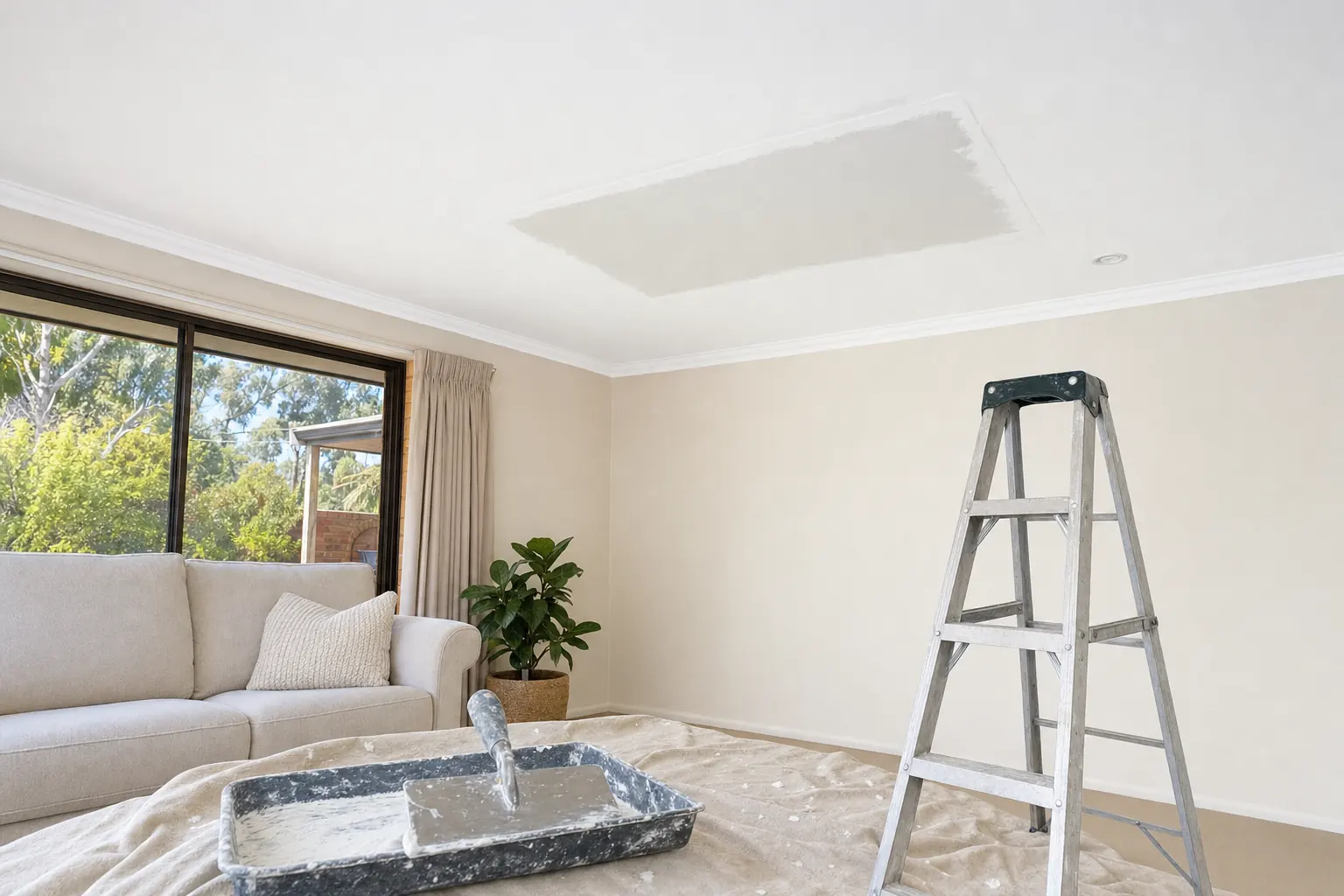
A repaired patch never looks right until it is painted, and a fresh patch of white on an older ceiling often stands out. The neat way is to paint the whole ceiling in that room, so the colour and sheen match edge to edge.
We leave the repair sanded and ready to paint, and quote painting as a separate item so you can see what it costs. If you would rather it ran as one job, we bring a painter in.
Insurance Claims for Ceiling Damage
If the damage came from a storm or a sudden leak, it may be covered by your home insurance. The insurer will usually want photos of the damage, the cause, and a written scope of the repair before they approve the work.
We handle insurance work directly with the insurer. We make the ceiling safe, photograph it, and write the scope the way the insurer needs it. Gradual damage, such as a slow leak left for months, is often treated differently by insurers, so check your policy.
How to Get an Accurate Quote
To quote accurately we need a few clear photos of the damage: one from across the room so we can see the size, one close up, plus your suburb and a line about what happened.
About half our quotes are done from photos and a phone call. When a site visit is needed, it is usually because the damage might extend past what the photos show, or the roof space needs checking.
Every quote we give is fixed price and in writing. It should list what is being repaired, how, whether the cornice and painting are included, and what happens if more damage is found once the old sheet is cut out.
Comparing Quotes
When two quotes are far apart, they are usually describing different jobs. One may cover patching the visible damage while the other covers refixing the whole room. One may include painting and cornice while the other leaves them out.
Ask each person quoting the same questions: what is causing the damage, how much of the ceiling are they fixing, how are they fixing it, and what is included in the finish. If one quote patches the dip and the other refixes the whole room, ask each of them why before you compare the prices.
Frequently Asked Questions
Why can't you give a price over the phone?
Because the cost depends on the material, the cause and how far the damage goes, and none of those can be judged from a description alone. About half our quotes are done from photos and a phone call. If yours needs a visit, we will tell you why before we book it.
Is it cheaper to patch a ceiling or replace it?
Patching is usually cheaper when the damage is in one area and the rest of the ceiling is sound. When the sheets are sagging across the room or have been patched many times before, replacing can cost less over time.
Does a ceiling repair quote include painting?
Ours doesn't, because painting is quoted as a separate item. The repair is left sanded and ready to paint, and we can bring a painter in so it runs as one job.
Why is my sagging ceiling quoted for the whole room?
Because the glue or fixings that failed in one corner are usually failing across the room. Refixing only the visible sag leaves the rest of the sheet hanging on the same fixings, and it tends to drop next.
Will insurance pay for my ceiling repair?
Storm and sudden leak damage is often covered, while slow damage over months often isn't. Check your policy. We can work directly with your insurer and provide the photos and written scope they ask for.
What happens if more damage is found during the job?
A written quote should say how that is handled. If cutting out a damaged section shows rotten battens or wet insulation, the extra work should be shown to you and agreed before it is done.
Getting Your Ceiling Looked At
If you want to know what your ceiling repair is likely to involve, send us a few photos through the contact form or give us a call. You'll get a written, fixed price quote that says exactly what is being fixed and how.
Ceiling Services That Can Help
If this sounds like your ceiling, here is how we can sort it.