AI Overview
Most holes in a ceiling can be repaired so they cannot be seen once the ceiling is painted. Small holes are filled, larger ones get a new piece of sheet, and a hole caused by water or a sagging sheet needs the cause fixed first.
Key takeaways
- Find out what made the hole before patching it.
- Small holes and nail pops, the little bumps where a loose nail pushes through the paint, can be filled at home.
- Larger holes need new sheet fixed to a backing piece or the framing.
- A hole in plasterglass, the older fibreglass reinforced plaster sheet, can mean the glue around it has failed.
- Test older ceiling sheet for asbestos before cutting it.
- Paint the whole ceiling in the room so the patch disappears.
On this page
A hole in the ceiling can usually be repaired so it can't be seen once the ceiling is painted. Small holes from fixings or old fittings are a simple patch, and bigger holes need a piece of new sheet fitted and joined in.
A hole made by something falling through from above, or by water, needs the cause checked before anything is patched.
The right repair depends on how big the hole is, what the ceiling is made of, and why it is there. A clean hole in firm sheet is usually a quick patch. Soft, stained or sagging edges mean it needs a proper look.
Before You Patch Anything
- Find out why the hole is there. Water, someone stepping through from the roof space, or a failed fixing each need a different fix.
- Check what the ceiling is made of. Plasterboard, often called gyprock, and plasterglass, an older fibreglass reinforced sheet, are repaired differently.
- Look for wiring and pipes above the hole before cutting the edges back.
- Homes built before the late 1980s can have ceiling sheet containing asbestos. Don't cut or sand it until it has been tested.
- A patch only disappears once the ceiling around it is painted.
What Made the Hole
The cause decides the repair. Most holes we see in Perth ceilings come from one of a handful of things, and each tells you something about what is happening above the sheet.
Old fittings and fixings
Removed downlights, old smoke alarms, ceiling fans and curtain fixings all leave holes. These are clean, round or square, and the sheet around them is usually sound. They are the easiest holes to repair.
A foot through from the roof space
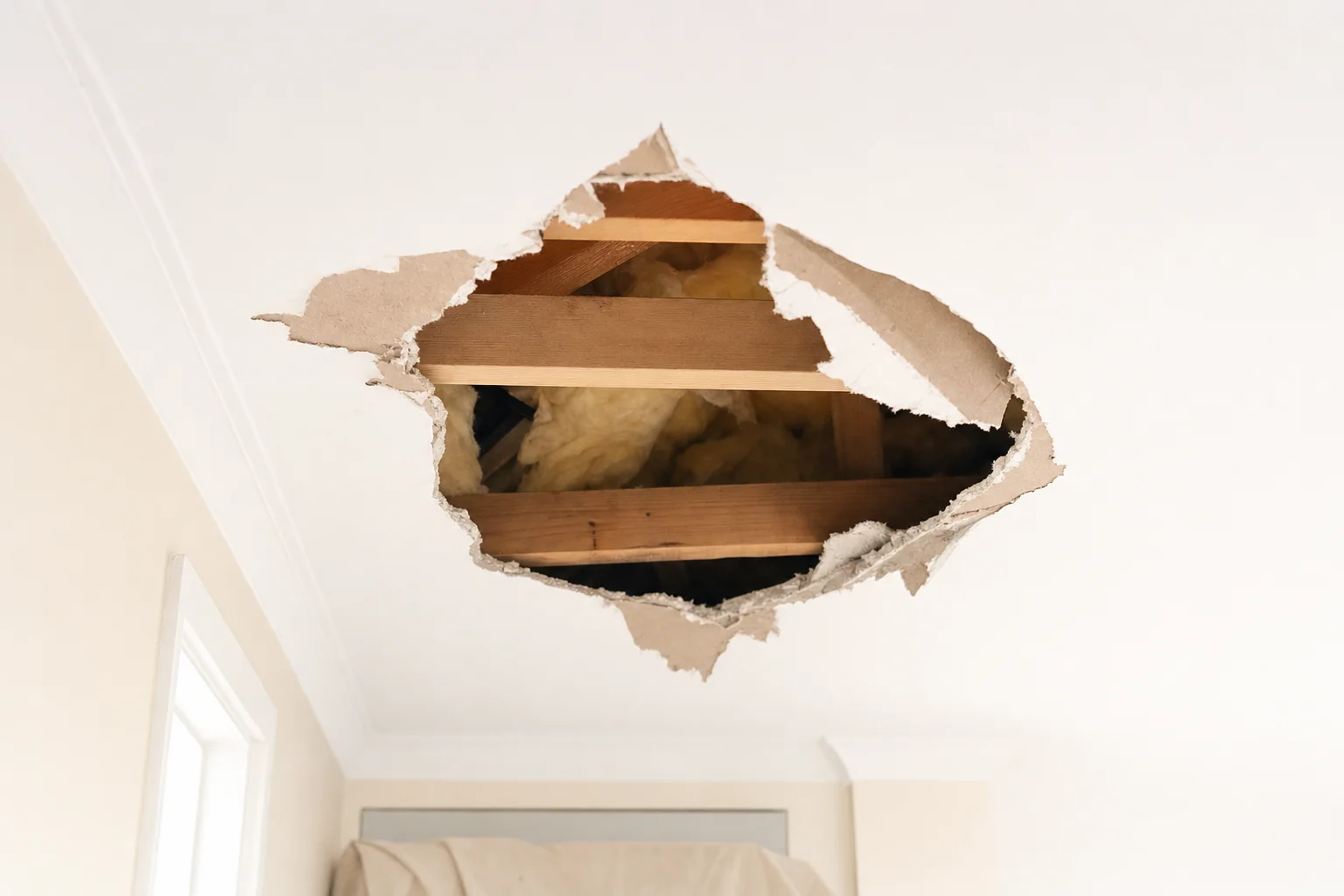
Anyone working in the roof, whether an electrician, an aircon installer or someone fetching stored boxes, can step off a joist and put a foot through. The joist is one of the main timber beams that carry the ceiling. The hole is usually ragged, and the sheet around it may have cracked further than you can see from below.
Water damage
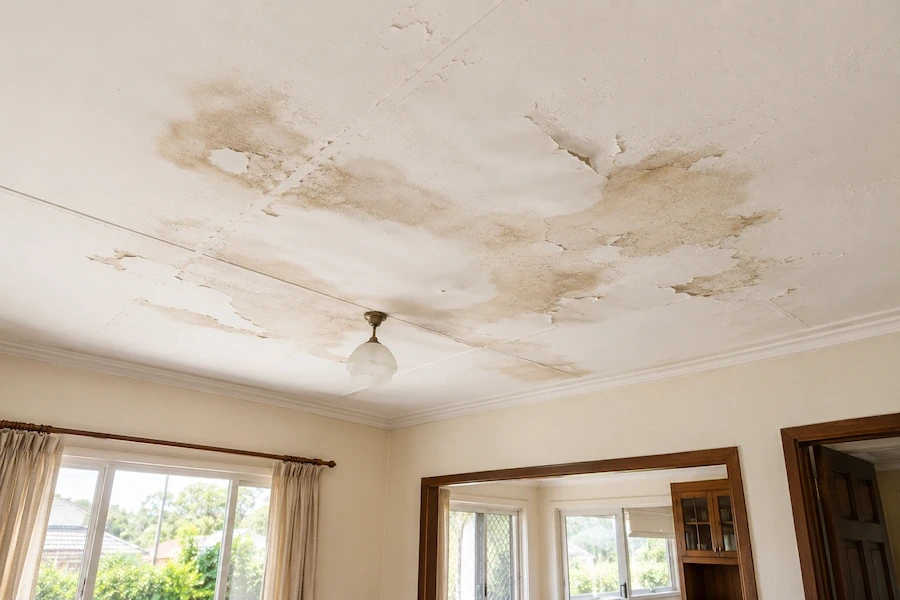
Water from a roof leak, a burst pipe or a leaking shower softens the plaster until it sags and breaks. If the hole has brown edges, a musty smell or a soft feel around it, water is the likely cause. The leak has to be fixed before the ceiling, or the repair will fail.
Impact from below
Furniture being moved, a ladder slipping or a broom handle can punch through a ceiling. These are usually small and the rest of the ceiling is fine.
How Big Is the Hole
Once the cause is known, the size of the hole decides how it is patched, and the edges matter as much as the width. A hole with soft, crumbling or sagging edges is a bigger job than its size suggests.
| Size of the hole | Usual repair | Good to know |
|---|---|---|
| Screw holes, nail pops and dents | Fill with plaster, sand and paint | Nail pops come back unless the sheet is refixed with a screw beside the nail |
| Up to the size of a fist | A patch with a backing piece behind it, then built up in thin coats of plaster, sanded and painted | Old downlight holes are the most common job in this size |
| Larger than a fist, smaller than a sheet width | Cut back to a neat square, fit new sheet onto timber supports, then plaster over the joins in thin coats | The cut is taken back to the nearest solid fixing |
| Across a large area or several sheets | Replace the damaged sheets | Often the better result when the ceiling is also sagging |
A nail pop is a small round bump or crack where a nail fixing the sheet has worked loose and pushed through the paint. It is common in older plasterboard ceilings as the timber shrinks and moves.
Plasterboard and Plasterglass Holes
Plasterboard, which most people call gyprock after the brand, is a sheet of gypsum plaster faced with paper. A hole in plasterboard is repaired by cutting the damaged area back to a clean shape and fitting a new piece of sheet the same thickness.
The new piece needs something to sit on.
For a small hole, a strip of timber or sheet is fixed behind the opening as a backing piece. For larger holes, the cut is taken back to the nearest joist or batten, the thin timber or steel strip the sheet is screwed to, so the new sheet can be fixed to the framing.
Plasterglass is an older sheet made of plaster reinforced with fibreglass. It was used in many Perth homes built between about 1970 and 2000 and was usually glued to the jarrah joists. A hole in plasterglass is often a sign the glue around it has let go, so the sheet near the hole needs checking for movement.
Where the sheet around the hole is loose, we re-strap it from the roof space. That means laying strips of fibreglass, called roving, soaked in plaster over the joists to hold the sheet firmly back up before the hole is patched.
What the Repair Involves
A tidy hole repair follows the same steps whatever the size. Skipping any of them is what makes a patch show through later.
- Make it safe. Check for wiring and pipes in the cavity, and turn off the power to any circuit near the hole.
- Cut back to sound sheet. Trim the ragged or soft edges back to a neat square or rectangle with firm sheet all round.
- Support the patch. Fix a backing piece or cut back to the framing so the new sheet has something solid to fix to.
- Fit the new piece. Cut new sheet to fit, fix it in place, and keep its face level with the ceiling around it.
- Tape and set the joins. Cover each join with paper tape bedded in plaster, then apply two or three thin coats, each wider than the last.
- Sand and paint. Sand the final coat smooth and paint the ceiling so the patch and the old ceiling match.
Setting means building up the plaster over the joins in thin layers, letting each dry before the next. It is the step that decides whether a patch can be seen.
When a DIY Patch Is Fine
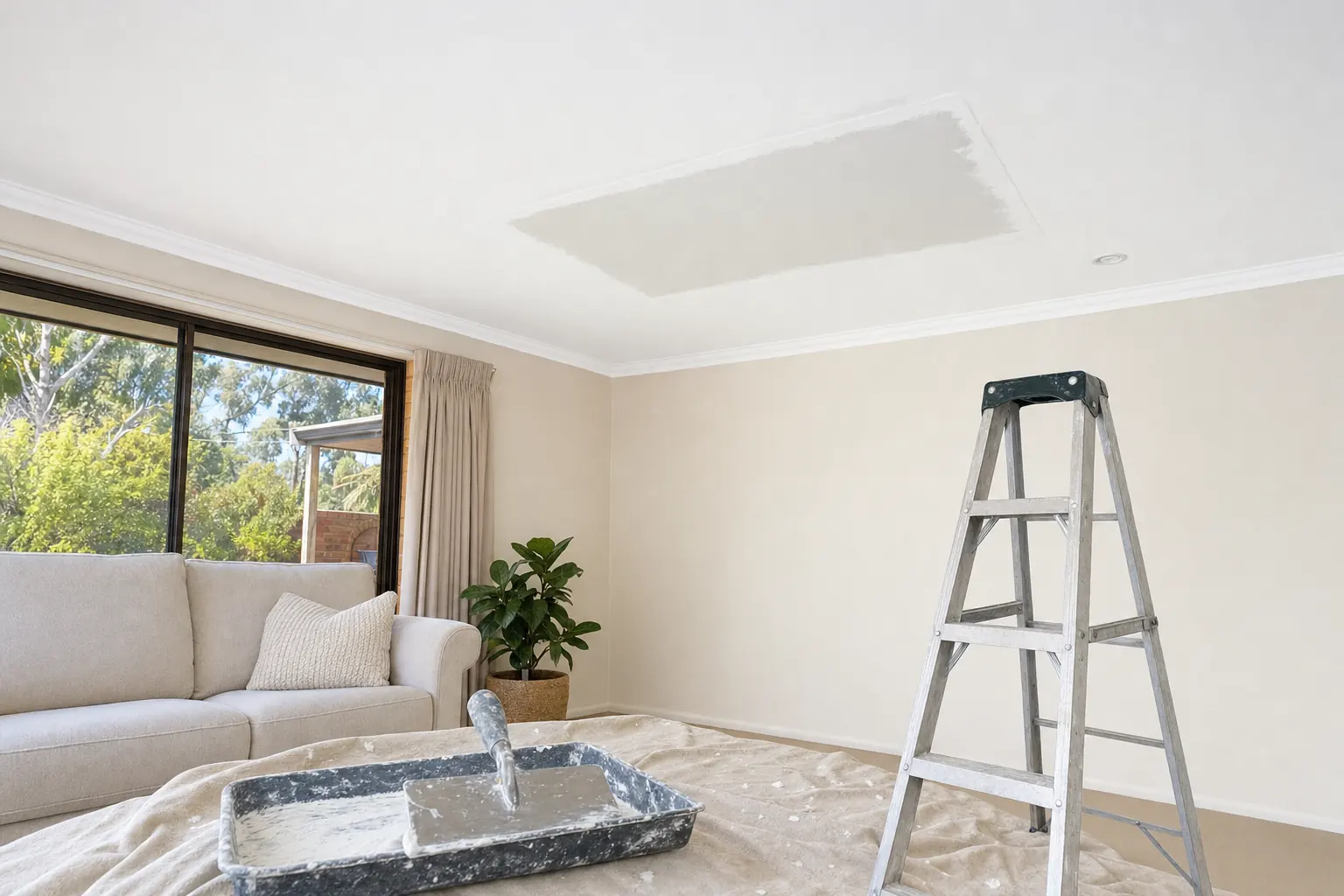
Small holes in sound plasterboard, such as screw holes, nail pops or a hole the size of a coin, are reasonable to fill yourself with a ready mixed filler from the hardware store. Use a wide blade, keep the coats thin and sand between them.
Ceilings are harder than walls because you are working overhead and every bump shows in the light from the window. If the first attempt shows a ridge or a dip, that is normal, and another thin coat sanded flat usually fixes it.
When to Call Someone
Some holes are a sign of a bigger problem, and patching over them only hides it for a while. Get the ceiling looked at when:
- the edges of the hole are soft, stained or crumbling, which points to water;
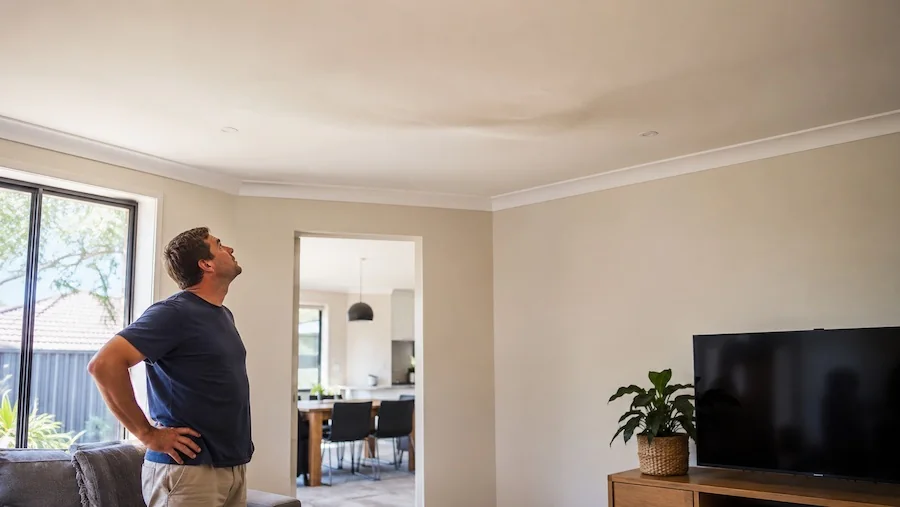
- the ceiling around the hole is sagging, dipping or cracked in lines;
- the hole is in plasterglass and the sheet nearby moves when you press on it gently;
- the house was built before the late 1980s and the sheet hasn't been tested for asbestos;
- the hole is near a light, fan or wiring;
- it is larger than a fist, or near the cornice, the moulding where the wall meets the ceiling.
A sagging ceiling with a hole in it can be heavy. If the sheet is hanging down or wet, keep people out of the room and don't push it back up yourself.
Holes Near Cornice and Light Fittings
A hole that runs into the cornice is harder to repair neatly, because the cornice has to be cut, refitted and joined to the existing length. A plain cove cornice, the curved profile in most Perth homes, is easy to match. Older and decorative profiles can take longer to match or repair in place.
Holes left by removed downlights are often filled when lights are upgraded or moved. If several sit in a row, it can be quicker and neater to replace the sheet than to patch each one. Any work near wiring should be coordinated with an electrician.
Getting the Patch to Disappear
The most common complaint about ceiling patches is that they can still be seen.
That usually comes down to three things: the patch sitting slightly proud, meaning it sticks out past the ceiling around it, joins that weren't feathered out, which means spread thin and wide so the edge fades away, or fresh paint on one patch of an older ceiling.
Light from a window across the ceiling shows every bump. The best way to hide a repair is to feather the plaster wide, sand it flat with a light held at a low angle, and paint the whole ceiling in that room.
Frequently Asked Questions
Can any hole in a ceiling be repaired?
Almost always, yes. Small and medium holes are patched with new sheet and set. When the damage is spread across several sheets, or the ceiling is also sagging, replacing those sheets usually gives a better result than patching.
How long does a ceiling hole repair take?
The fitting is quick, but each coat of plaster has to dry before the next. A small to medium patch is often fitted and set over a day or two, with painting done once the final coat is dry and sanded.
Why does my ceiling patch still show?
Usually the patch sits slightly proud, the joins weren't feathered wide enough, or the new paint doesn't match the old. Another thin coat sanded flat, and painting the whole ceiling in that room, normally fixes it.
Is a hole in the ceiling dangerous?
A clean hole in sound sheet isn't. A hole with wet, soft or sagging sheet around it can be, because the ceiling may be heavy and losing its fixing. Keep people out of the room and get it looked at.
Can I patch a hole in a plasterglass ceiling myself?
A very small hole in firm plasterglass can be filled like plasterboard. A larger hole is often a sign the glue around it has failed, so the sheet needs checking and may need re-strapping from the roof space first.
What should I do if someone has stepped through my ceiling?
Check that nobody is hurt and keep people out from under the hole. Take photos, then have the sheet around it checked, because the crack often runs further than you can see from below.
Getting Your Ceiling Fixed
If you've got a hole in the ceiling and aren't sure what is behind it, send us a few photos through the contact form or give us a call. Many repairs can be quoted from photos, and every quote is fixed price and in writing.
Ceiling Services That Can Help
If this sounds like your ceiling, here is how we can sort it.