AI Overview
Ceiling mould is usually caused by excess moisture trapped inside the home. While mould spores naturally exist in the air, they only begin growing when damp conditions are present. Humidity, condensation, roof leaks, plumbing leaks, and poor ventilation all create the moisture mould needs to spread across ceiling surfaces.
Key takeaways
- Ceiling mould develops when moisture becomes trapped inside the home
- Humidity and condensation are common causes in Australian homes
- Roof leaks and plumbing leaks often create hidden mould problems
- Poor ventilation prevents ceilings from drying properly
- Mould in ceiling cavities can spread unnoticed for long periods
- Mould can weaken plasterboard and plaster-glass ceilings
On this page
Ceiling mould is usually caused by excess moisture trapped inside the home. While mould spores naturally exist in the air, they only begin growing when damp conditions are present. Humidity, condensation, roof leaks, plumbing leaks, and poor ventilation all create the moisture mould needs to spread across ceiling surfaces.
In many Australian homes, warm humid air rises and becomes trapped near ceilings, especially in bathrooms, laundries, kitchens, and older homes with limited ventilation. Over time, moisture soaks into plasterboard, plasterglass ceilings, insulation, and paint. This creates the ideal environment for ceiling mould to grow and spread.
Quick Facts on Ceiling Mould
- Ceiling mould develops when moisture becomes trapped inside the home
- Humidity and condensation are common causes in Australian homes
- Roof leaks and plumbing leaks often create hidden mould problems
- Poor ventilation prevents ceilings from drying properly
- Mould in ceiling cavities can spread unnoticed for long periods
- Mould can weaken plasterboard and plaster-glass ceilings
- Fixing the moisture source is the key to preventing mould from returning
Why Moisture Causes Ceiling Mould
Moisture is the main reason ceiling mould develops. Mould spores are naturally present in indoor air, but they only become a problem once surfaces remain damp for extended periods.
Ceilings are one of the most common places for mould growth because warm, humid air naturally rises. Without proper airflow, that moisture becomes trapped near ceiling surfaces and inside roof cavities. Materials commonly used in Australian homes, including plasterboard and older plasterglass ceilings, can absorb moisture over time and create the ideal conditions for mould growth.
In many cases, mould in ceiling areas starts slowly and remains hidden until stains, odours, or paint damage become visible.
| Moisture Source | How It Causes Ceiling Mould |
|---|---|
| Humidity | Keeps ceiling surfaces damp for long periods |
| Condensation | Creates repeated moisture buildup on ceilings |
| Roof leaks | Allows water to soak into ceiling materials |
| Plumbing leaks | Traps hidden moisture inside ceiling cavities |
| Poor ventilation | Prevents ceilings from drying properly |
Common Moisture Problems That Lead to Ceiling Mould
Ceiling mould usually develops when moisture becomes trapped inside the home for long periods. In many Australian homes, several moisture problems may be contributing to mould growth at the same time.
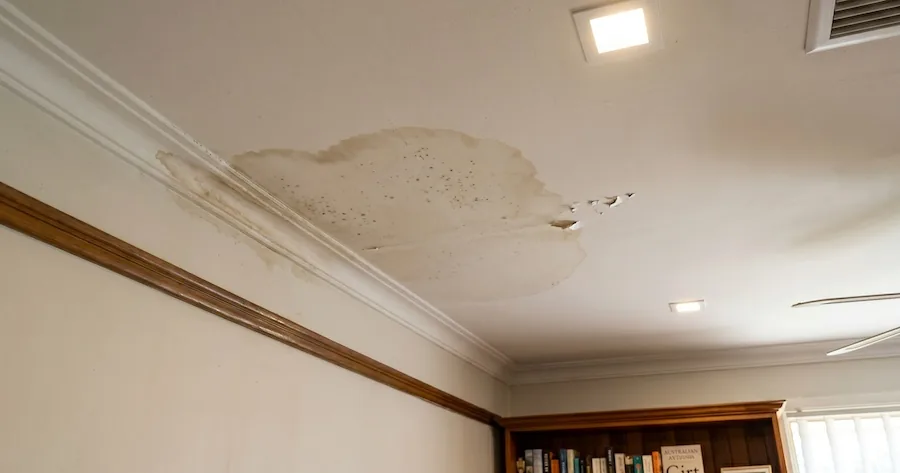
Some issues develop gradually through humidity and condensation, while others are caused by roof leaks, plumbing problems, or poor ventilation. Identifying the source properly is important because mould will often keep returning if the underlying moisture problem is not repaired.
Indoor Humidity
Indoor humidity is one of the most common causes of mould in Australian homes. Everyday activities such as showering, cooking, and drying clothes indoors release large amounts of moisture into the air.
As warm humid air rises, the moisture collects near ceilings and upper corners where airflow is often limited. Homes with poor ventilation are especially vulnerable because the humid air becomes trapped indoors instead of escaping outside.
Bathrooms, laundries, and kitchens are some of the most common areas where mould on ceiling surfaces begins forming, particularly during humid weather or colder months when airflow is reduced.
Ceiling Condensation
Condensation happens when warm, moist air comes into contact with cooler ceiling surfaces, causing water droplets to form repeatedly over time.
Repeated condensation keeps ceiling materials damp and creates the conditions mould needs to spread. This problem is particularly common during winter and in older Australian homes with inadequate insulation or limited airflow.
Condensation commonly forms around:
- Ceiling corners
- Air conditioning vents
- Windows
- Cornices
Even small amounts of recurring condensation can eventually lead to mould problems if the moisture is not addressed early.
Poor Ventilation
Poor ventilation allows humid air and moisture to remain trapped inside the home. Without airflow, ceilings stay damp for longer and moisture cannot dry properly.
Bathrooms, laundries, and kitchens are particularly vulnerable because they regularly produce steam and humidity. In many Perth homes, poor ventilation is one of the main reasons mould keeps returning after cleaning.
Common ventilation issues include:
- Missing exhaust fans
- Blocked roof vents
- Poor roof cavity airflow
- Limited window ventilation
- Closed-up rooms with trapped humidity
Without addressing the airflow problem, attempts to remove mould from ceiling surfaces are often only temporary.
Roof Leaks and Storm Damage
Roof leaks are one of the most serious causes of ceiling mould because water can soak into ceiling materials long before visible damage appears inside the home.
In Perth homes, roof leaks are commonly caused by broken roof tiles, damaged flashing, rusted roofing, blocked gutters, and storm damage. Water may travel through roof cavities before stains or damp patches become visible on the ceiling below.
Common warning signs include:
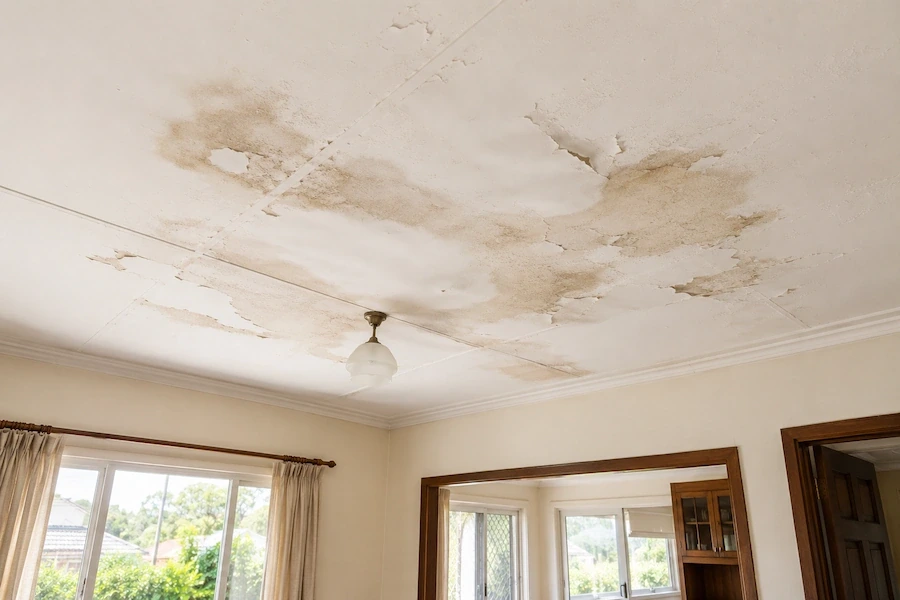
- Water stains
- Bubbling paint
- Damp ceiling patches
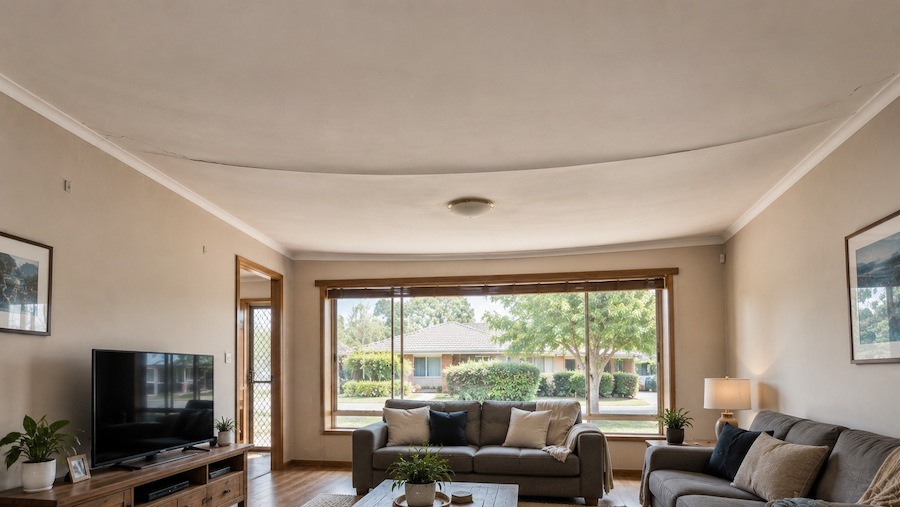
- Sagging plasterboard
- Musty smells
By the time these signs appear, mould may already be spreading through insulation, plasterboard, and ceiling cavities.
Plumbing Leaks Above Ceilings
Slow leaks from pipes, bathrooms, or upper-floor plumbing fixtures can keep ceiling cavities constantly damp for months without obvious warning signs.
This moisture can spread through insulation, timber framing, plasterboard, and ceiling joints. Because the leak often stays hidden, mould may continue growing behind paint and plaster before becoming visible inside the room.
Long-term plumbing leaks can eventually weaken ceiling materials and contribute to sagging ceilings or more serious structural damage.
Air Conditioning and Cooling System Issues
According to Actron Air, air conditioning systems can also contribute to ceiling mould problems when water leaks from any piping or condensation forms around vents.
Blocked drain lines, leaking drip trays, and temperature differences around vents can all create ongoing moisture problems above the ceiling. Over time, this trapped moisture may lead to damp patches, peeling paint, and mould growth around air conditioning vents.
Why Ceiling Mould Spreads Quickly
Ceiling mould can spread far quicker than many homeowners realise. Once moisture becomes trapped inside a ceiling cavity or absorbed into plasterboard, mould spores can begin multiplying rapidly.
Ceiling spaces often create the ideal conditions for mould because they are warm, dark, humid, and poorly ventilated. This is especially common in older Perth homes where roof ventilation may be limited or insulation has deteriorated over time.
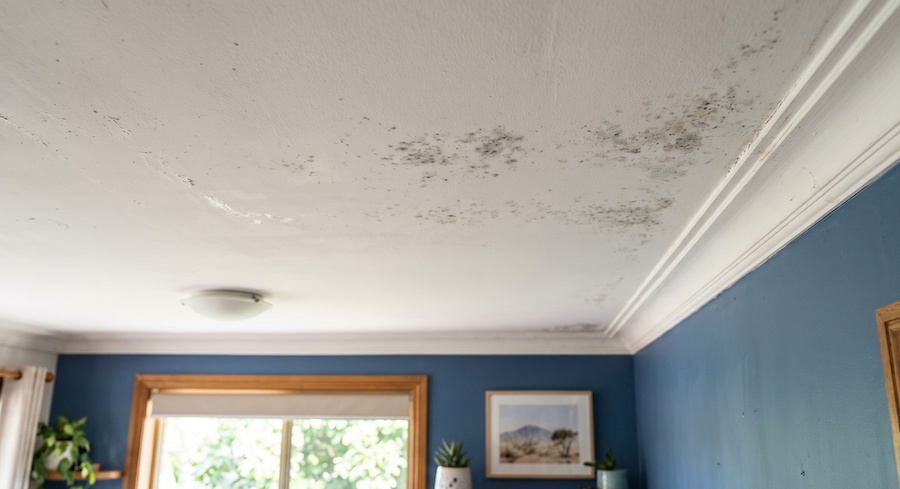
One of the biggest issues with ceiling mould is that it often spreads out of sight first. While a small stain or patch may appear visible on the surface, the moisture and mould growth inside the ceiling cavity can be far more extensive.
| Early Signs | Advanced Signs |
|---|---|
| Small ceiling marks | Large mould patches |
| Mild musty odour | Strong persistent odours |
| Minor condensation | Sagging ceilings |
| Small paint bubbles | Cracking plasterboard |
| Damp corners | Structural ceiling damage |
Health Risks Linked to Ceiling Mould
Ceiling mould not only damages the home, but it can also cause serious health conditions.
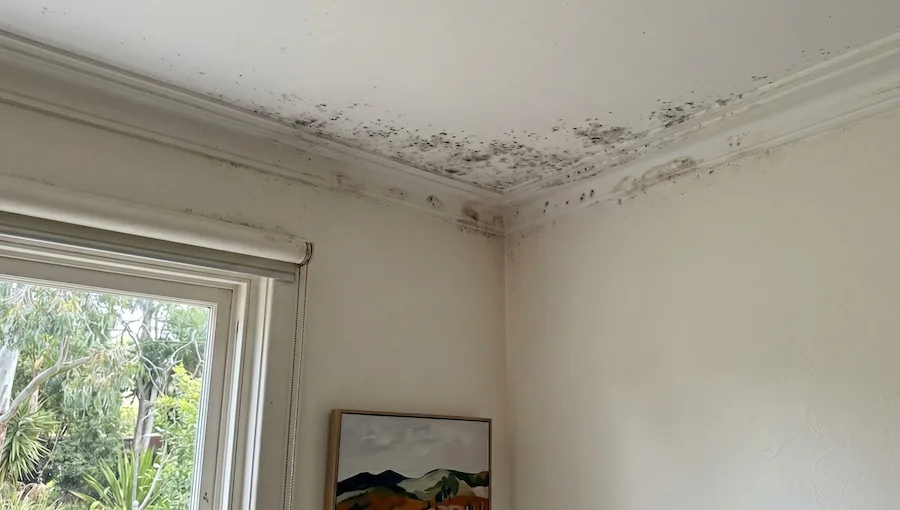
As mould grows, it releases more spores into the air. In enclosed indoor environments, these spores may affect people already sensitive to airborne allergens or respiratory conditions.
Some common symptoms linked to mould exposure include:
- Allergies
- Sneezing
- Coughing
- Sinus irritation
- Asthma flare-ups
- Respiratory discomfort
Children, elderly residents, and people with asthma are often more sensitive to mould exposure. Ongoing moisture and mould growth inside ceilings can continue affecting air quality throughout the home if left untreated.
How to Prevent Ceiling Mould Problems
Preventing mould starts with controlling moisture. In most cases, mould problems can be greatly reduced by improving ventilation, managing humidity, and repairing water leaks early.
Small preventative measures can help avoid larger ceiling repairs later.
Improve Ventilation
Good airflow is one of the most important ways to reduce mould. Without ventilation, steam and humid air remain trapped indoors, particularly near ceiling surfaces. Bathrooms are one of the biggest problem areas in Perth homes because many older properties either have no exhaust fan installed or the existing fan is no longer effective.
Improving airflow may include:
- Installing exhaust fans
- Improving roof ventilation
- Opening windows regularly
- Using rangehoods while cooking
- Keeping airflow moving through humid rooms
Control Indoor Moisture
Reducing indoor humidity plays a major role in preventing ceiling mould. Condensation and steam should be managed early before moisture buildup becomes ongoing.
Practical ways to reduce moisture indoors include avoiding drying clothes inside, wiping condensation when it appears, and using dehumidifiers in persistently damp rooms.
Repeated moisture buildup will continue feeding mould growth over time if it is not addressed properly.
Repair Water Leaks Early
Water leaks should always be repaired quickly because even small leaks can create major mould problems if moisture remains trapped inside ceilings.
Many homeowners do not realise how far water can travel through a roof cavity before visible signs appear indoors. By the time stains or mould patches become obvious, moisture damage may already be widespread above the ceiling.
Regular roof inspections are particularly important after heavy storms or prolonged rainfall across Perth.
Upgrade Insulation Where Needed
Insulation also plays an important role in reducing condensation and moisture problems. Poor insulation allows ceiling surfaces to become colder, particularly during winter. Older Australian homes often have outdated or insufficient insulation, increasing the likelihood of condensation buildup and ongoing mould problems.
Why Ceiling Mould Is Common in Australian Homes
Ceiling mould is a common problem across many Australian homes, particularly older properties exposed to humidity, condensation, or water damage.
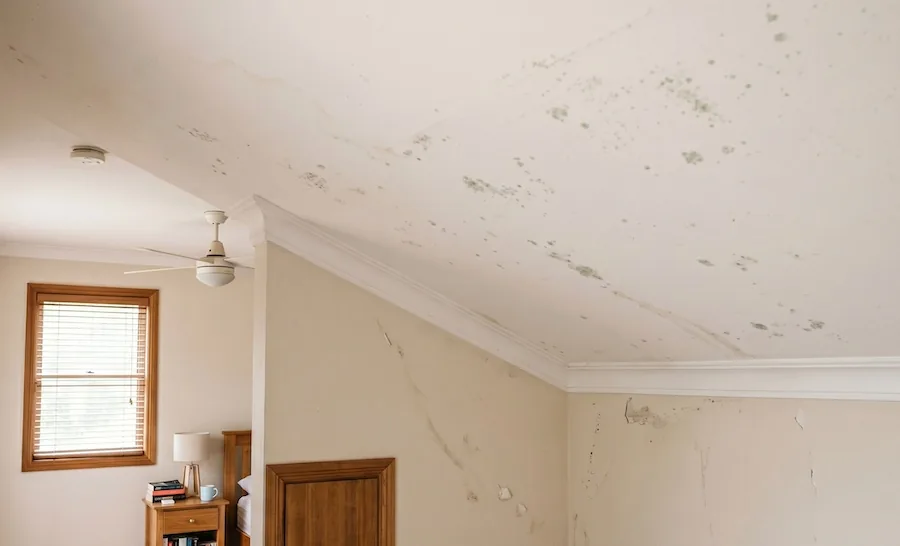
Australia’s climate creates ideal conditions for moisture buildup in many areas of the home. Warm temperatures, humid weather, heavy storms, and cooler winter mornings can all contribute to ceiling moisture problems.
In Perth, ceiling mould is commonly linked to humid summers, winter condensation, roof leaks after storms, poor ventilation, ageing plaster-glass ceilings, and inadequate insulation. Older homes are often more vulnerable because ventilation standards were very different when many properties were built. Bathrooms and laundries in older homes may have little or no effective extraction, allowing steam and humidity to build up over time.
Frequently Asked Questions
Can humidity alone cause ceiling mould?
Yes. High indoor humidity can create enough moisture for ceiling mould to grow, particularly in bathrooms, laundries, and poorly ventilated rooms. Warm humid air rises and collects near ceilings. Over time, this moisture allows mould spores to settle and spread across damp surfaces.
Does ceiling mould always mean there is a roof leak?
Not always. While roof leaks are a common cause, ceiling mould may also develop from condensation, high indoor humidity, plumbing leaks, or poor ventilation. A professional inspection can help identify the exact moisture source.
Is mould on ceilings dangerous?
Mould on ceiling surfaces may affect indoor air quality and contribute to respiratory irritation, allergies, and asthma symptoms. Long-term mould exposure should not be ignored, especially in homes with children, elderly residents, or people with respiratory conditions.
Why does mould keep returning after cleaning?
Recurring mould usually means the underlying moisture problem has not been fixed. Cleaning visible mould may temporarily improve appearance, but moisture trapped inside the ceiling cavity can continue feeding mould growth behind the surface.
Should mouldy ceilings be repaired or replaced?
It depends on the severity of the damage. Minor mould problems may only require repairs and moisture control. However, ceilings with significant water damage, sagging, or structural deterioration may require partial or full ceiling replacement.
Preventing Ceiling Mould Needs Early Action
Ceiling mould develops when excess moisture becomes trapped inside the home. Humidity, condensation, roof leaks, plumbing leaks, and poor ventilation all create the damp conditions that mould needs to grow and spread.
Ignoring ceiling mould can lead to more serious ceiling damage over time, including sagging plasterboard, weakened plasterglass ceilings, and ongoing indoor air quality problems. Identifying and repairing the moisture source early is the best way to prevent larger repairs later.
If you are dealing with ceiling mould, mould in ceiling cavities, water damage, or sagging ceilings, Ceiling Repairs Perth provides inspections and ceiling repair services across Perth for homes affected by moisture and ceiling damage.
Ceiling Services That Can Help
If this sounds like your ceiling, here is how we can sort it.