AI Overview
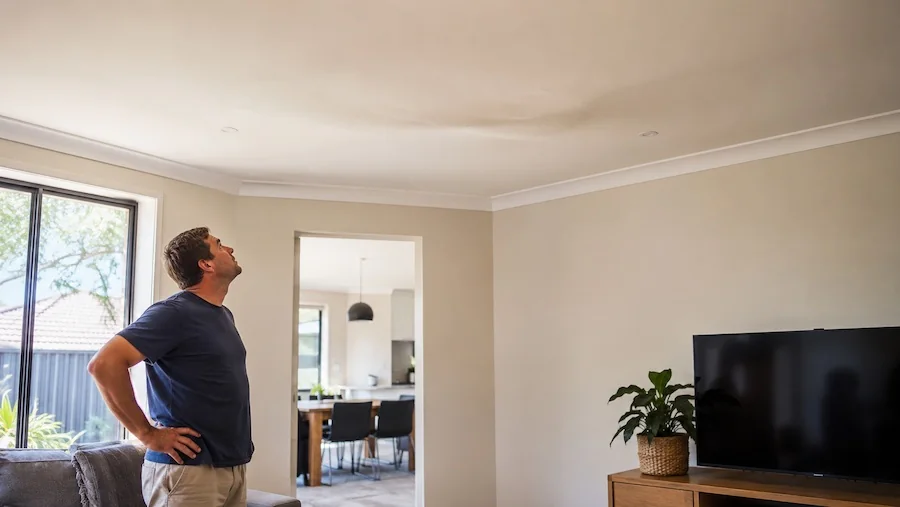
A ceiling water stain should never be ignored because it is often an early warning sign of hidden moisture damage inside the home. What may look like a small cosmetic mark can actually point to roof leaks, plumbing issues, mould growth, or ceiling materials weakening over time. In many Perth homes, a ceiling stain appears […]
Key takeaways
- A ceiling water stain usually indicates an active moisture problem.
- Common causes include roof leaks, plumbing leaks, and condensation.
- A water stain on the ceiling can lead to mould growth and structural damage.
- Water-damaged ceilings may sag or collapse if ignored.
- Early repairs are usually cheaper than major ceiling replacement.
- A water leak stain on the ceiling surfaces should always be inspected properly.
On this page
A ceiling water stain should never be ignored because it is often an early warning sign of hidden moisture damage inside the home. What may look like a small cosmetic mark can actually point to roof leaks, plumbing issues, mould growth, or ceiling materials weakening over time.
In many Perth homes, a ceiling stain appears gradually after winter rain, roof deterioration, blocked gutters, or condensation problems. Acting early can help prevent larger structural repairs, mould spread, and ceiling collapse risks later.
The Key Points
- A ceiling water stain usually indicates an active moisture problem.
- Common causes include roof leaks, plumbing leaks, and condensation.
- A water stain on the ceiling can lead to mould growth and structural damage.
- Water-damaged ceilings may sag or collapse if ignored.
- Early repairs are usually cheaper than major ceiling replacement.
- A water leak stain on the ceiling surfaces should always be inspected properly.
- Perth homes are commonly affected during the heavy winter rain and storm seasons.
What a Ceiling Water Stain Usually Means
A ceiling water stain is a symptom of the actual problem itself. In most cases, it is simply the visible sign that moisture has entered the ceiling cavity from somewhere above.
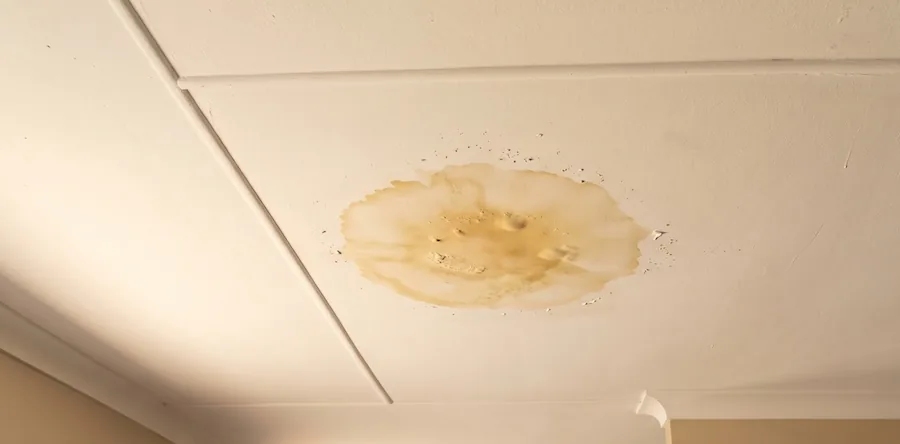
Water can travel through roofing materials, insulation, timber framing, and plasterboard before becoming visible inside the home. By the time a ceiling stain appears, moisture may have already caused hidden damage above the ceiling lining.
A Water Stain Is Often a Sign of Hidden Damage
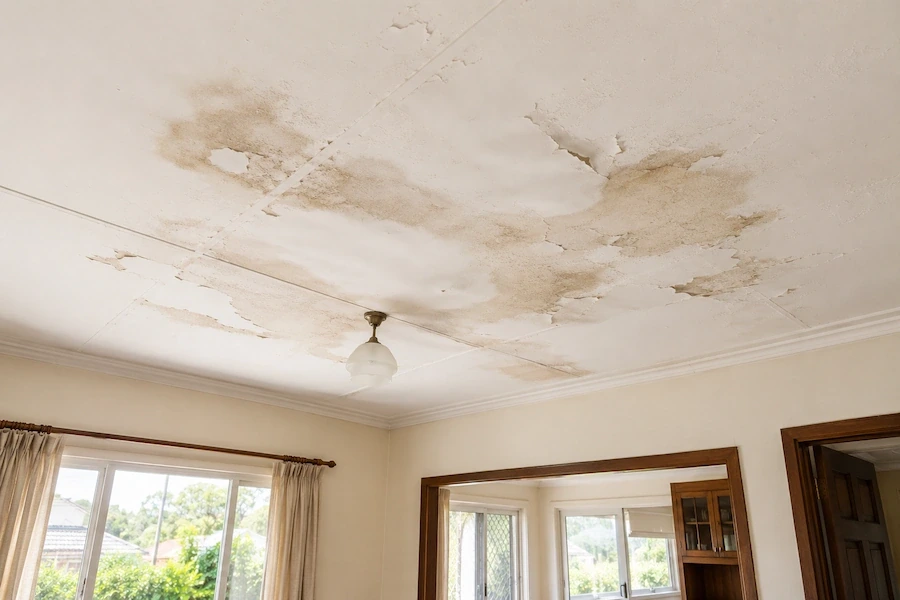
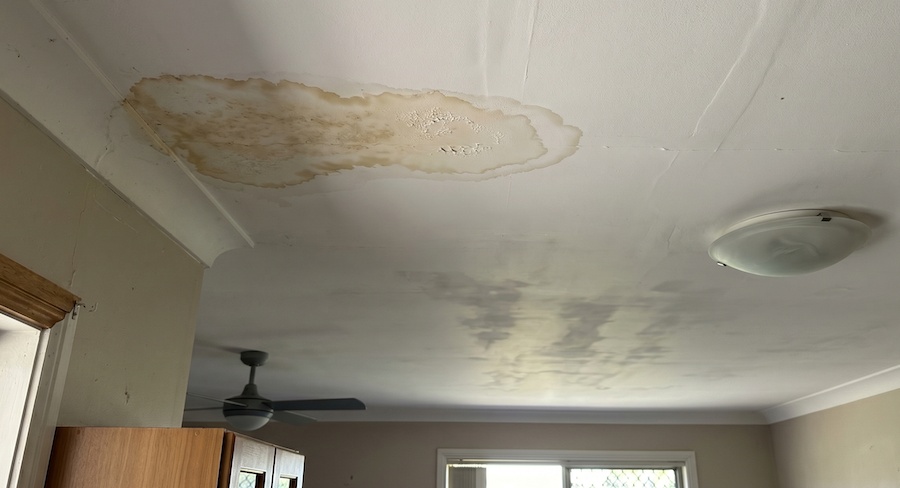
In many Perth homes, a water stain starts as a faint yellow patch or small discoloured ring before gradually becoming darker or larger. The stain may worsen after rain, humidity changes, or ongoing plumbing leaks.
Common signs associated with a water stain ceiling problem include:
- Bubbling paint
- Brown or yellow staining
- Damp plasterboard
- Small ceiling cracks
- Soft ceiling sections
- Musty smells
A water leak stain on ceiling surfaces may indicate that water has been entering the property for weeks or even months before becoming visible.
Why Ceiling Water Stains Are Common in Perth Homes
Perth homes regularly experience conditions that contribute to ceiling water damage. Heavy winter rain, ageing roofing materials, poor roof ventilation, and blocked gutters are all common causes.
Older Perth properties can be especially vulnerable because many still contain ageing plasterglass ceilings or deteriorated roofing systems. Condensation build-up inside poorly ventilated roof spaces can also create a water stain without obvious storm damage.
Common Causes of Ceiling Water Stains
There are several possible causes of a ceiling water stain, and identifying the actual source is critical before repairs begin. In many cases, the visible stain is only a symptom of a larger hidden moisture issue.
Some causes develop suddenly after storms or plumbing failures, while others worsen slowly over time through ongoing moisture exposure.
Roof Leaks
Roof leaks are one of the most common reasons homeowners find a ceiling water stain inside their home. Over time, Perth roofs are exposed to harsh sun, seasonal storms, heavy rain, and temperature changes that gradually wear down roofing materials.
Common roof-related causes include broken roof tiles, damaged flashing, rusted metal roofing, blocked gutters, cracked ridge capping, and ageing roof structures.
| Roof Problem | Possible Ceiling Damage |
|---|---|
| Broken roof tiles | Water is entering the ceiling cavity |
| Blocked gutters | Overflow into the roof space |
| Damaged flashing | Localised ceiling leaks |
| Rusted roofing | Ongoing moisture intrusion |
| Storm damage | Sudden ceiling water stain |
A water stain on ceiling surfaces caused by roof leaks appears after rain and worsens gradually if not repaired immediately. In many homes, the leak itself may be far away from where the stain eventually appears because water can travel through the roof cavity before becoming visible.
Plumbing Leaks
Plumbing leaks are another major cause of a ceiling water stain, particularly in double-storey homes or properties with bathrooms above living areas.
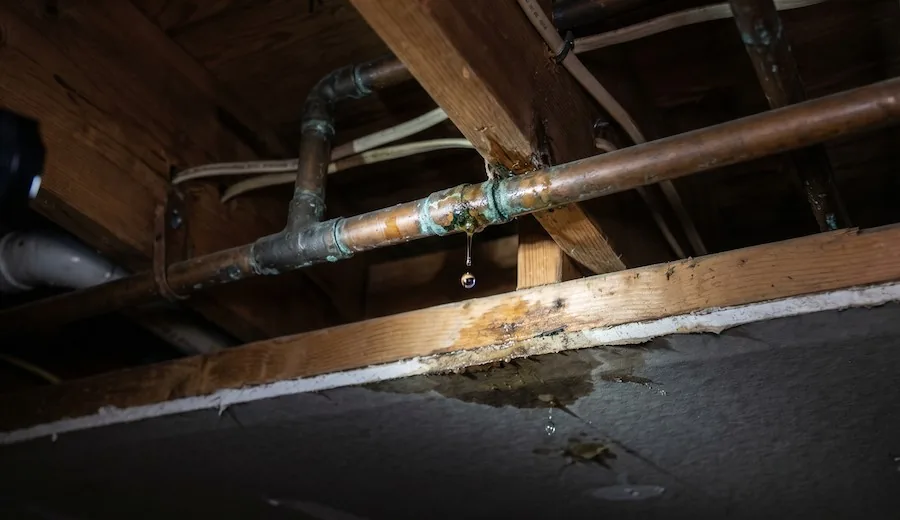
Even a slow plumbing leak can eventually create significant damage inside the ceiling cavity. Moisture from leaking pipes, failed waterproofing, overflowing fixtures, or leaking shower bases may continue spreading long before visible signs appear.
A water stain ceiling issue caused by plumbing leaks often comes from:
- Bathrooms
- Laundries
- Kitchens
- Hallways beneath the upstairs plumbing
Unlike roof leaks, plumbing leaks can continue causing damage regardless of weather conditions. A water leak stain on ceiling surfaces beneath bathrooms should always be inspected properly, as delays can lead to a full-blown water line.
Air Conditioning & Condensation Problems
Not every ceiling water stain is caused by rainwater or plumbing failures. In some Perth homes, condensation and air conditioning problems are responsible for ongoing moisture damage.
Blocked drain lines are one of the more common reasons that contribute to ceiling damage due to air conditioning system problems.
Why You Should Never Ignore a Ceiling Water Stain
A ceiling water stain may appear minor at first, but hidden moisture can continue damaging the property long after the stain becomes visible. The longer the issue is ignored, the greater the risk of structural damage, mould growth, and expensive repairs.
Many ceiling problems that begin as small stains eventually develop into sagging ceilings or major restoration work when the leak source remains unresolved.
Ceiling Collapse Risk
One of the biggest dangers of a ceiling water stain is the risk of ceiling collapse.
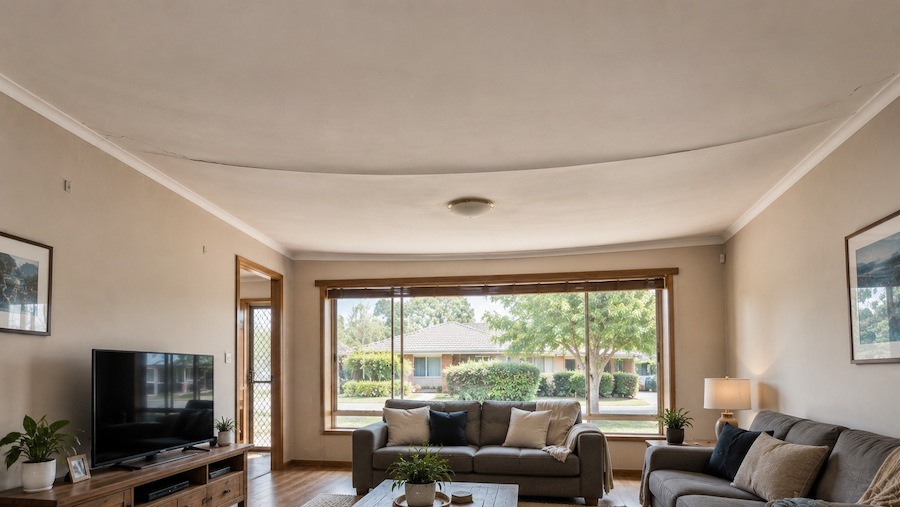
When plasterboard absorbs moisture, it gradually weakens and loses structural strength. Over time, ceilings may begin sagging, cracking, bowing, or pulling away from fixings.
Older plaster-glass ceilings found in many Perth homes can become particularly dangerous when saturated with water because they become extremely heavy.
| Warning Sign | What It May Mean |
|---|---|
| Sagging ceiling | Water trapped above plasterboard |
| Soft ceiling areas | Moisture, weakening materials |
| Bubbling paint | Ongoing hidden moisture |
| Ceiling cracks | Structural movement or saturation |
| Cornice separation | Ceiling shifting under weight |
A water leak stain on ceiling sections that show sagging or movement should never be ignored because the ceiling may no longer be structurally safe.
Hidden Structural Damage
A ceiling water stain can also indicate hidden structural damage inside the roof cavity. Moisture often spreads through timber framing, insulation, cornices, and surrounding wall linings before homeowners realise how extensive the damage has become.
Over time, ongoing moisture exposure may cause:
- Timber rot
- Damaged insulation
- Deteriorating plasterboard
- Ceiling movement
- Cornice damage
- Internal paint damage
A water stain ceiling problem should never be judged purely by the size of the visible stain. In many homes, the actual moisture damage extends well beyond what can be seen from inside the room.
Mould Growth & Indoor Air Quality Problems
A ceiling water stain creates ideal conditions for mould growth, especially when moisture remains trapped inside ceiling cavities or plasterboard.
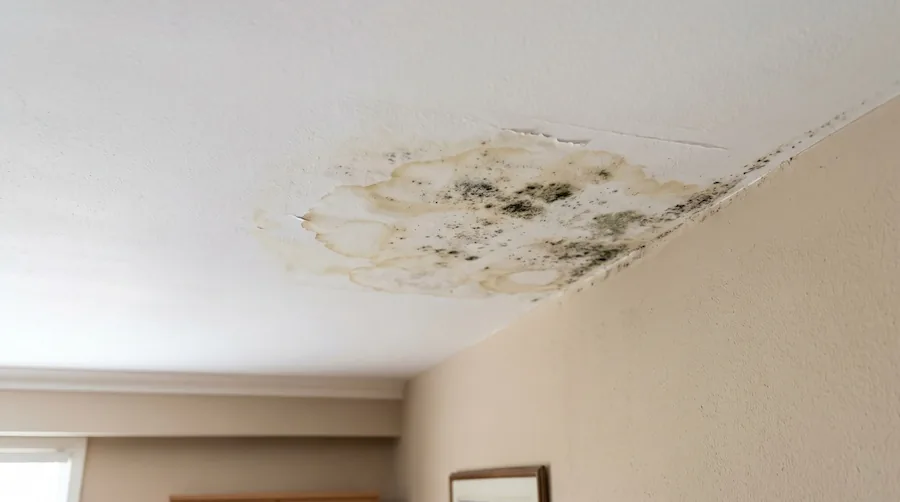
Mould often develops behind ceilings before it becomes visible inside the room itself. By the time mould appears around a water stain on the ceiling, contamination inside the cavity may already be more widespread.
Signs of mould-related ceiling problems may include:
- Musty smells
- Dark ceiling spots
- Persistent dampness
- Peeling paint
- Discoloured plasterboard
Electrical Safety Hazards
A ceiling water stain can also become an electrical safety issue if water reaches wiring, light fittings, or ceiling fixtures hidden above the plasterboard.
Moisture near electrical systems may lead to:
- Electrical faults
- Flickering lights
- Tripped safety switches
- Damaged fittings
- Water dripping from downlights
What to Do if You Notice a Ceiling Water Stain
Acting early is the best way to limit damage caused by a ceiling water stain. Many homeowners delay inspections because the stain appears small or temporarily dries out between rain periods.
The visible mark, however, is often only part of the issue.
Steps Homeowners Should Take
If you notice a water leak stain on ceiling surfaces:
- Check whether the stain worsens after rain
- Look for sagging or soft ceiling sections
- Inspect gutters or roofing externally if safe
- Check nearby plumbing fixtures
- Avoid touching sagging ceiling areas
- Arrange a professional inspection
Painting over a ceiling water stain without repairing the moisture source only hides the visible symptom temporarily. The underlying leak must always be repaired first before ceiling restoration work begins.
Common Mistakes Homeowners Make
Many ceiling problems become worse because homeowners unknowingly treat the visible stain instead of the actual moisture source. Small delays can eventually turn manageable repairs into major ceiling restoration work.
A ceiling water stain should always be treated as a warning sign rather than a cosmetic issue.
Painting Over the Stain
One of the most common mistakes is painting over a water stain ceiling problem without fixing the actual leak.
Although repainting may temporarily improve the appearance, the stain usually returns once moisture continues entering the ceiling cavity.
Waiting Too Long to Investigate
Some homeowners assume the leak has stopped because the stain temporarily dries between storms. Unfortunately, hidden moisture often continues spreading internally even when the ceiling surface appears stable.
Delaying repairs may increase the risk of mould growth, structural damage, and ceiling collapse.
Repairing the Ceiling Before Fixing the Leak
Repairing plasterboard before identifying the moisture source is another common issue.
Long-lasting repairs always require the original leak source to be identified and repaired first, whether the issue involves roofing, plumbing, condensation, or ventilation problems.
Frequently Asked Questions
Is a ceiling water stain dangerous?
A ceiling water stain can become dangerous if moisture weakens the plasterboard or reaches electrical systems. Sagging ceilings should always be inspected promptly.
Can a ceiling collapse from water damage?
Yes. Long-term moisture exposure can weaken ceiling materials and eventually cause sections of the ceiling to collapse.
Will a water stain on ceiling areas disappear on its own?
The visible stain may dry temporarily, but the underlying moisture problem usually remains unless the source of the leak is repaired.
What causes brown stains on ceilings?
Brown stains are commonly caused by roof leaks, plumbing leaks, condensation, or overflowing gutters allowing moisture into the ceiling cavity.
Should I paint over a ceiling water stain?
No. Painting over a ceiling water stain without fixing the leak only hides the visible damage temporarily.
Can mould grow from a water leak stain on ceiling surfaces?
Yes. Damp plasterboard and trapped moisture create ideal conditions for mould growth inside ceilings and walls.
Act on a Ceiling Water Stain Immediately
A ceiling water stain is often an early warning sign of hidden moisture damage inside the home. What appears to be a small cosmetic issue can quickly develop into mould growth, structural damage, sagging ceilings, or electrical hazards if left untreated.
In many Perth homes, ceiling water damage is caused by roof leaks, plumbing failures, blocked gutters, condensation, or ageing roofing materials. Identifying the source early is usually the best way to plan how to address the problem.
If you have noticed a ceiling water stain, water stain on ceiling areas, or a water leak stain on ceiling surfaces, Ceiling Repairs Perth provides services such as inspections, water-damaged ceiling repairs, sagging ceiling repairs, and ceiling restoration across the Perth metro area. Get in touch today.
Ceiling Services That Can Help
If this sounds like your ceiling, here is how we can sort it.