AI Overview
You can often prevent a ceiling collapse by identifying and repairing problems early. The best way to prevent a ceiling collapse is to fix leaks promptly, maintain your roof, inspect ceilings regularly, and act on any signs of damage before they worsen. Most ceilings do not fail without warning.
Key takeaways
- Water damage is the most common cause of ceiling collapse in Australian homes.
- Always treat a sagging ceiling as a safety concern.
- Visible warning signs often appear before a ceiling collapse occurs.
- Roof maintenance helps prevent water damage and structural deterioration.
- Older plaster-glass ceilings require regular inspections.
- Early repairs are usually far more affordable than full ceiling replacement.
On this page
You can often prevent a ceiling collapse by identifying and repairing problems early. The best way to prevent a ceiling collapse is to fix leaks promptly, maintain your roof, inspect ceilings regularly, and act on any signs of damage before they worsen.
Most ceilings do not fail without warning. In many cases, there are visible warning signs of ceiling collapse that appear weeks, months, or even years before a failure occurs. Understanding what causes ceiling damage and knowing what to look for can help protect your home, your belongings, and your family’s safety.
Key Points
- Water damage is the most common cause of ceiling collapse in Australian homes.
- Always treat a sagging ceiling as a safety concern.
- Visible warning signs often appear before a ceiling collapse occurs.
- Roof maintenance helps prevent water damage and structural deterioration.
- Older plaster-glass ceilings require regular inspections.
- Early repairs are usually far more affordable than full ceiling replacement.
- Understanding the warning signs of ceiling collapse can help prevent costly repairs and potential injury.
Why a Potential Ceiling Collapse Should Never Be Ignored
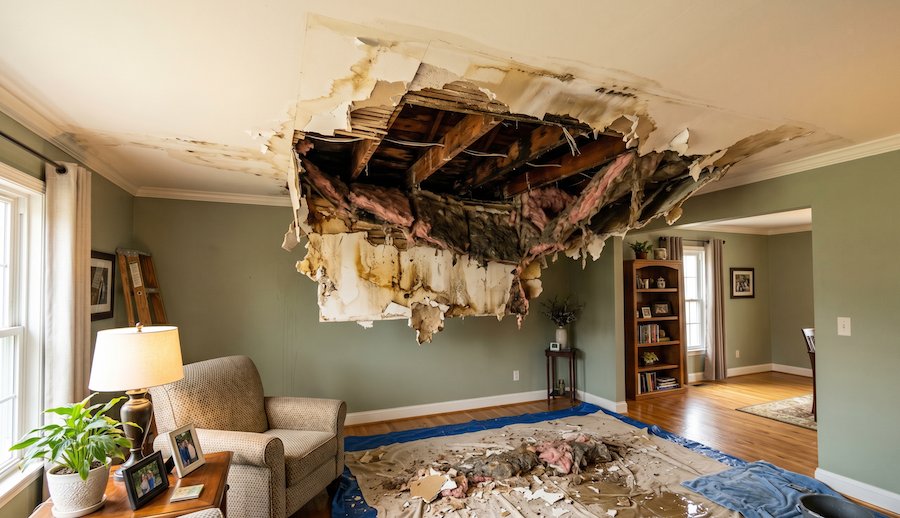
A ceiling collapse is more than a cosmetic problem. When ceiling materials, fixings, or supporting structures weaken, sections of the ceiling can fall unexpectedly and create a serious safety hazard.
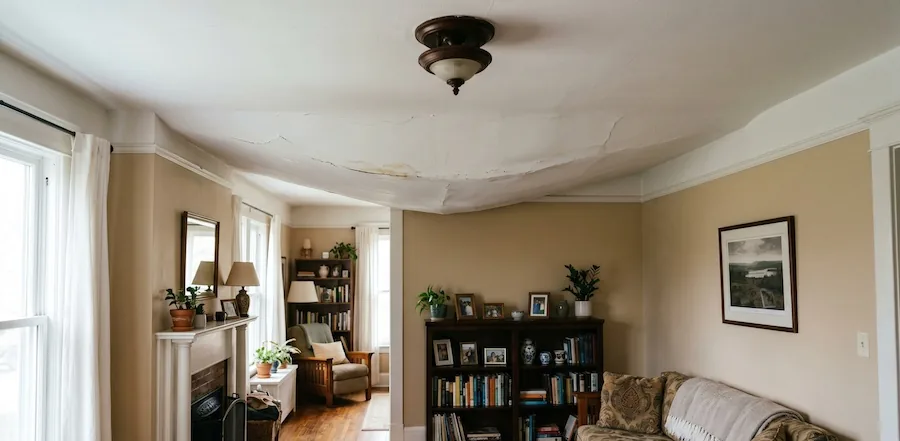
Falling plasterboard, plasterglass, insulation, and light fittings can damage furniture, flooring, and personal belongings. In some situations, occupants may also be at risk of injury. This is why homeowners should take any signs that their ceiling will collapse seriously.
Many homeowners delay repairs because the damage appears minor. A small stain, a crack, or a slightly sagging section may not seem urgent, but these issues often indicate larger problems hidden above the ceiling. Addressing them early is usually far simpler and more affordable than dealing with a major ceiling collapse.
What Causes Ceiling Collapse in Australian Homes?
Several factors can contribute to ceiling collapse. While every home is different, most ceiling failures can be traced back to a handful of common causes.
Water Damage and Roof Leaks
Water damage is the leading cause of ceiling collapse in Australian homes.
When moisture enters the ceiling cavity, it increases the weight of ceiling materials while reducing their structural strength. Over time, plasterboard softens, fixings weaken, and sagging can begin to develop.
Common sources of water damage include:
- Roof leaks
- Damaged flashing
- Broken roof tiles
- Overflowing gutters
- Plumbing leaks
- Air conditioning condensation
Because water can travel through roof spaces before becoming visible, the leak does not always originate directly above the damage.
Ageing Ceiling Systems
Like any part of a home, ceilings deteriorate with age.
Many older Perth homes still contain original plaster-glass ceilings and ageing ceiling systems that have endured decades of movement, temperature changes, and general wear. As materials age, fixings can weaken, and ceiling sheets may begin to separate from the structure above.
Older ceilings often show ceiling collapse warning signs before failure occurs, making regular inspections particularly important.
Poor Installation or Previous Repairs
Some ceiling problems originate from the original installation.
Incorrect fixings, poor workmanship, low-quality materials, or previous repairs that failed to address the root cause can all contribute to ceiling movement and deterioration. These issues may take years to become obvious, but they can significantly increase the likelihood of ceiling collapse.
Excessive Weight in the Roof Space
Ceilings are not designed to support heavy storage loads.
Items stored in roof spaces, additional insulation, ducted air conditioning components, and other equipment can place stress on ceiling structures if they are not properly supported. Existing weaknesses caused by age or water damage can worsen when excessive weight is introduced.
Structural Movement
Buildings naturally move over time, but excessive movement can place additional stress on ceilings.
Foundation settlement, roof movement, storm damage, and timber shrinkage can all contribute to cracking, sagging, and separation between ceiling materials and supporting structures.
Lack of Ongoing Maintenance
One of the most preventable causes of ceiling collapse is a lack of maintenance.
Minor leaks, small cracks, and early signs of sagging often develop gradually. When these issues are ignored, damage continues to worsen until major repairs become necessary.
| Cause | Risk Level | Typical Warning Signs |
|---|---|---|
| Water damage | High | Stains, sagging, mould |
| Ageing ceilings | High | Cracks, movement |
| Poor installation | Medium to High | Sagging, fixing failure |
| Excess roof loads | Medium to High | Bowing, movement |
| Structural movement | Medium | Cracks, cornice separation |
Warning Signs Your Ceiling May Be at Risk of Collapse
Most ceiling collapse incidents provide warning signs before failure occurs. Recognising these indicators early can help prevent significant damage and improve safety.
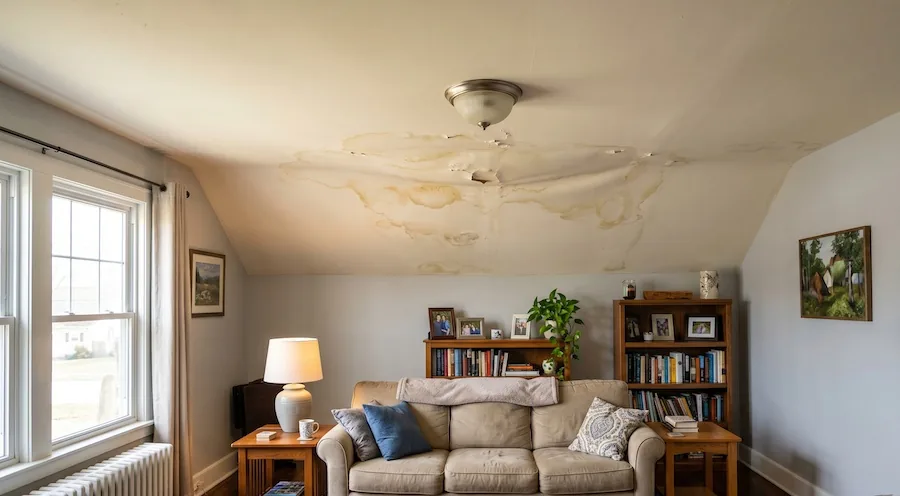
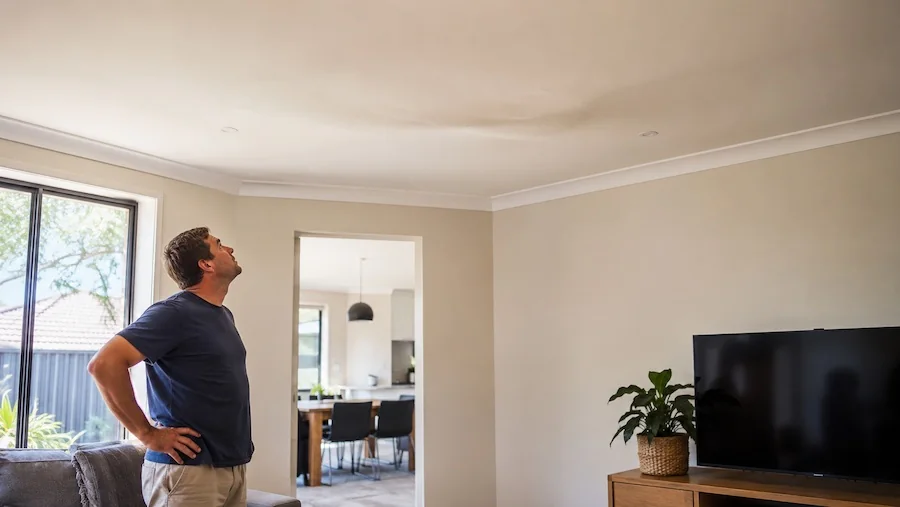
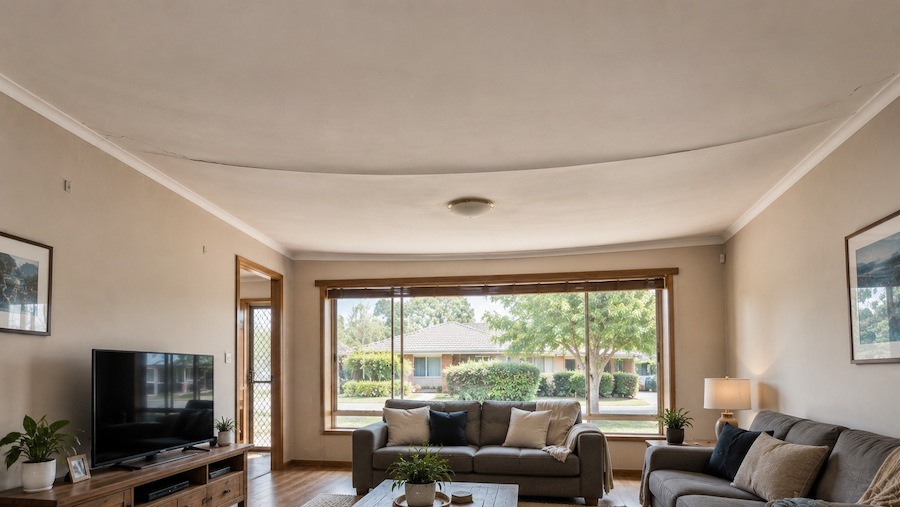
Sagging Ceilings
Sagging is one of the most obvious signs that your ceiling will collapse, according to the Government of Western Australia.
A ceiling should appear flat and level. If sections begin to bow, dip, or droop, it often indicates that materials or fixings are no longer adequately supported.
Even minor sagging can indicate serious deterioration above the ceiling surface.
Cracks and Cornice Movement
While some minor cracking can occur naturally as homes age, larger cracks or expanding cracks may indicate structural movement or ceiling stress.
Pay particular attention to cracks that continue to grow, reappear after repairs, or develop around cornices and ceiling joints.
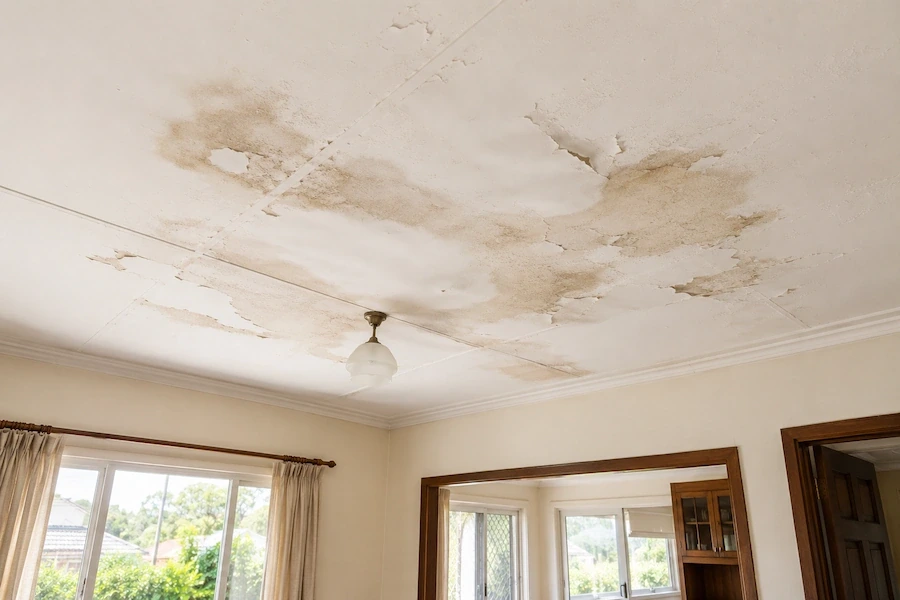
Water Stains and Bubbling Paint
Brown stains, yellow marks, bubbling paint, and swollen plasterboard often indicate moisture entering the ceiling cavity.
Water damage remains one of the leading causes of ceiling collapse, so these issues should never be ignored. Even if the ceiling appears structurally sound, hidden deterioration may already be occurring.
Mould and Musty Odours
Persistent musty smells and mould growth often indicate ongoing moisture problems.
Mould can develop before major damage becomes visible and may suggest that water has been entering the ceiling cavity for an extended period.
Unusual Noises and Visible Fasteners
Cracking, popping, or creaking sounds can indicate movement within the ceiling structure.
Visible fasteners, screw heads, nail pops, or circular depressions appearing in rows across the ceiling may suggest that fixings are beginning to fail. These are common warning signs of ceiling collapse, particularly in older ceilings.
How to Prevent a Ceiling Collapse
Preventing a ceiling collapse is usually a matter of identifying problems early and maintaining the areas that most commonly contribute to ceiling damage.
Arrange Regular Ceiling Inspections
Regular inspections help identify damage before it becomes a serious safety concern.
At least once each year, inspect your ceilings for sagging, cracks, stains, mould, and other visible signs of deterioration. Additional inspections are recommended after severe storms, roof leaks, or major building work.
Older homes should be inspected more frequently due to the increased risk associated with ageing ceiling systems.
Fix Water Leaks Immediately
Water damage remains the leading cause of ceiling collapse, making leak repairs one of the most effective preventative measures.
Any roof leak, plumbing leak, damaged flashing, or drainage issue should be addressed as soon as possible. Repairing the source of the moisture is just as important as repairing the ceiling itself.
Maintain Your Roof
Your roof protects the ceiling below, making regular roof maintenance essential.
Routine maintenance should include checking roof coverings, gutters, downpipes, flashings, and roof penetrations. Storm damage should also be inspected promptly to prevent water intrusion.
Avoid Overloading Roof Spaces
Heavy storage should be avoided unless the roof space has been specifically designed for that purpose.
Equipment installed within roof cavities should be properly supported by structural framing rather than relying on ceiling materials for support.
Address Problems Early
Small issues rarely stay small.
A minor stain, crack, or sagging section can often be repaired relatively easily when identified early. Delaying repairs allows damage to spread, increasing both repair costs and the risk of ceiling collapse.
Have Older Ceilings Professionally Assessed
Older plaster-glass ceilings deserve particular attention.
Many ageing ceilings remain structurally sound, but some may require reinforcement, restoration, or replacement depending on their condition. Professional assessments can help identify risks before they become serious safety concerns.
When Should You Call a Ceiling Repair Specialist?
Some ceiling issues should never be left to monitor indefinitely.
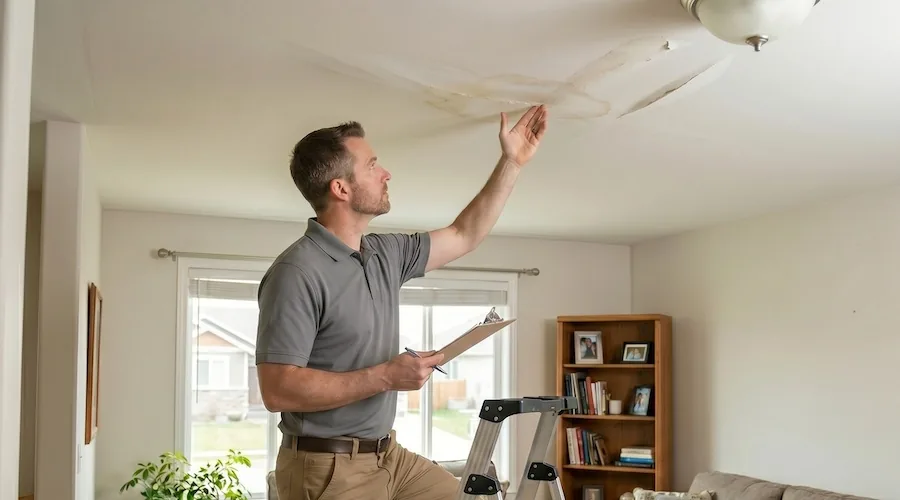
If you notice sagging ceilings, water damage, large cracks, mould caused by ongoing moisture, visible fixing problems, or repeated cracking noises, it is worth arranging a professional inspection.
A specialist can identify the underlying cause of the damage, assess whether there is an immediate ceiling collapse risk, and recommend the most appropriate repair solution.
Can a Sagging Ceiling Be Repaired?
In many cases, yes.
A sagging ceiling can often be repaired if the damage is identified early and the ceiling materials remain structurally sound. Localised water damage, minor movement, and fixing issues can frequently be addressed without full replacement.
However, extensive water damage, widespread fixing failure, severe sagging, or significant plasterglass deterioration may require more substantial repair work or replacement.
| Condition | Repair Possible? |
|---|---|
| Minor sagging | Usually |
| Localised water damage | Often |
| Large sagging areas | Sometimes |
| Extensive water damage | Rarely |
| Severe fixing failure | Often replacement |
| Ageing plasterglass deterioration | Assessment required |
The sooner a problem is assessed, the more repair options are generally available.
Frequently Asked Questions
Can a ceiling collapse without warning?
While a ceiling collapse can sometimes appear sudden, most ceilings show warning signs beforehand. Sagging, cracks, water stains, mould, unusual noises, and visible fixing problems are among the most common indicators.
Is a sagging ceiling dangerous?
Yes. A sagging ceiling should always be treated as a safety concern because it may indicate that the ceiling structure has weakened.
What is the most common cause of ceiling collapse?
Water damage is the most common cause of ceiling collapse in Australian homes. Roof leaks, plumbing leaks, and ongoing moisture exposure can gradually weaken ceiling materials and fixings.
How often should ceilings be inspected?
Most homes should have ceilings visually inspected at least once per year. Additional inspections are recommended after storms, roof leaks, or whenever damage becomes visible.
Can water stains lead to ceiling collapse?
Yes. Water stains often indicate moisture entering the ceiling cavity. If the source of the leak remains unresolved, ceiling materials can weaken over time and increase the risk of ceiling collapse.
Should older plaster-glass ceilings be replaced?
Not always. Many older plaster-glass ceilings can be repaired or reinforced. A professional assessment is the best way to determine the safest and most practical solution.
Act Fast to Maintain Safety
A ceiling collapse is often the result of issues that have been developing for months or years. Water damage, ageing ceiling systems, structural movement, excessive roof space loads, and poor maintenance are among the most common causes.
Understanding the warning signs of ceiling collapse and acting early can significantly reduce the risk of serious damage. Regular inspections, roof maintenance, and prompt repairs are often enough to prevent many ceiling problems from becoming major structural issues.
If you’ve noticed ceiling collapse warning signs, water damage, sagging ceilings, or other signs that your ceiling will collapse, Ceiling Repairs Perth can help assess the problem and provide the services necessary to address the issue. Contact us today.
Ceiling Services That Can Help
If this sounds like your ceiling, here is how we can sort it.